You might think one missing tooth is no big deal. It does not hurt, and you can still chew on the other side. So you wait.
Delaying replacement of a missing tooth can lead to bone loss, shifting teeth, bite problems, and higher treatment costs over time.
Tooth loss starts changes in your mouth within months. Your jawbone begins to shrink, and nearby teeth can move into the empty space.
As time passes, these small changes can affect your oral health, your comfort, and your budget. Acting early and selecting single missing tooth replacement options often means simpler care, fewer procedures, and lower costs.
Key Takeaways
- A missing tooth can trigger bone loss and tooth movement soon after tooth loss.
- Waiting can lead to more complex treatment and higher long-term costs.
- Replacing a missing tooth early helps protect your oral health and bite.
Table of Content
- Immediate Changes After Losing a Tooth
- Long-Term Consequences of Delaying Tooth Replacement
- Oral Health Risks and Systemic Impact
- Tooth Replacement Solutions and Their Benefits
- Financial and Emotional Costs of Waiting
- Frequently Asked Questions
Immediate Changes After Losing a Tooth
When you lose a tooth, changes start quickly inside your mouth. Your jawbone, gums, and nearby teeth begin to adjust, even if you do not feel pain right away.
How Your Jawbone and Gums Respond
The moment a tooth is gone, the bone that held it in place loses stimulation. Your tooth root used to press into the jawbone each time you chewed. Without that pressure, bone resorption begins.
Bone loss can start within the first few months. Over time, this can lead to visible jawbone loss, especially if you leave the space empty for a year or more.
Your gums also change. The gum tissue shrinks as the bone underneath shrinks. This can create small pockets that trap food and bacteria.
If bacteria build up, your risk for periodontal disease increases. Gum infection can then damage nearby teeth, not just the one you lost.
The Chain Reaction of Shifting and Bite Changes
Your teeth work as a team. When you have a missing tooth, the nearby teeth no longer have support on one side.
Teeth naturally move toward open space. This leads to teeth shifting, tilting, or rotating into the gap. The tooth across from the space may also grow longer because it has no contact to stop it.
These movements affect your bite alignment. Even small shifts can cause uneven pressure when you chew.
Over time, this can lead to clear bite problems, such as jaw soreness, uneven wear, and cracks in other teeth. What started as one missing tooth can slowly affect your whole bite.
Long-Term Consequences of Delaying Tooth Replacement
When you delay tooth replacement, the effects do not stay in one small spot. Your jawbone, nearby teeth, bite, and even your facial shape can change in ways that make future treatment more complex and costly.
Progressive Bone Loss and Jawbone Deterioration
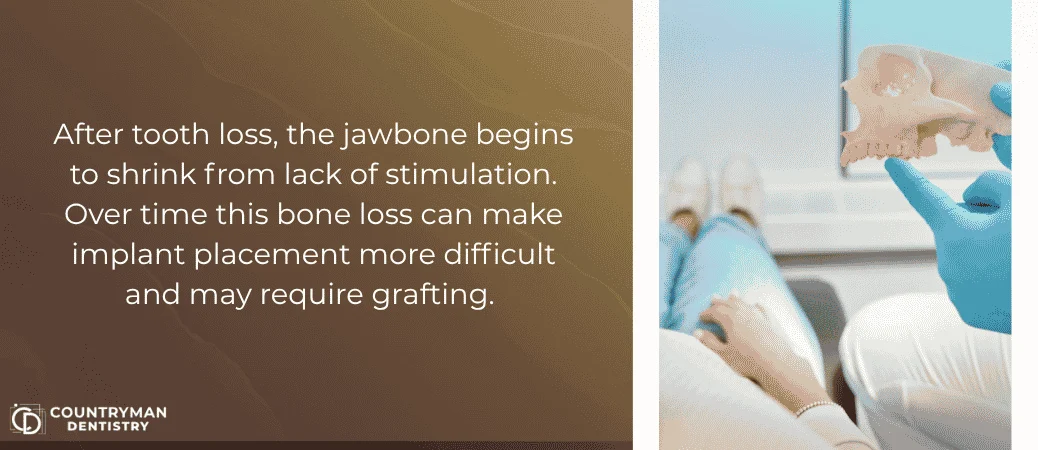
When you lose a tooth, the jawbone under it no longer gets pressure from chewing. That pressure keeps bone strong. Without it, your body starts to break down the unused bone. This process can begin within months.
Over time, this leads to jawbone deterioration. The bone becomes thinner and shorter, which can make placing a dental implant harder.
You may need bone grafting to rebuild the area before you can move forward with certain tooth replacement options.
Many dentists warn about the bone loss in the jaw after tooth loss. Acting sooner can help prevent bone loss and reduce the need for extra procedures.
If you wait several years, the site may require more complex surgery. That adds time, cost, and healing to your treatment plan.
Shifting Teeth and Risk of Additional Tooth Loss
Your teeth work as a team. When one is missing, the nearby teeth often start to move into the empty space.
They may tilt, drift, or rotate. The tooth across from the gap can also move down or up because it no longer has contact. These shifts can create tight spaces that trap food and plaque.
This movement raises your risk for periodontal problems and decay. According to dentists who discuss the risks of delaying tooth replacement, shifting teeth can also increase the chance of additional tooth loss over time.
As teeth move out of place, they become harder to clean. Small issues can turn into larger problems that affect more than one tooth.
Bite Misalignment and Chewing Difficulties
A missing tooth can change how your upper and lower teeth meet. Even one gap can lead to bite changes.
You may start to chew more on one side. That uneven pressure can strain certain teeth and jaw muscles. Over time, you might notice difficulty chewing foods you once handled with ease.
An uneven bite can also cause faster wear on specific teeth. Some dental providers explain that bite alignment changes without timely replacement can place extra stress on your remaining teeth.
When chewing function declines, you may avoid certain foods. This affects comfort and can limit your food choices.
Changes to Facial Appearance and Speech
Your teeth support your lips and cheeks. When bone shrinks and teeth shift, your face can look slightly sunken in that area.
This gradual facial sagging often becomes more noticeable with time. It may make you look older than you are, especially if several teeth are missing.
Missing front teeth can also lead to speech problems. Certain sounds require your tongue to press against your teeth. Without that support, words may sound unclear.
Dentists often note that delaying treatment can lead to bone loss, shifting teeth, and facial changes that grow worse over time.
Choosing timely tooth replacement options can help you restore your smile, support your facial structure, and maintain clear speech.
Oral Health Risks and Systemic Impact
When you leave a gap in your smile, bacteria, bone loss, and bite changes do not stay in one place. They affect your gums, jawbone, and even how well you eat and fuel your body.
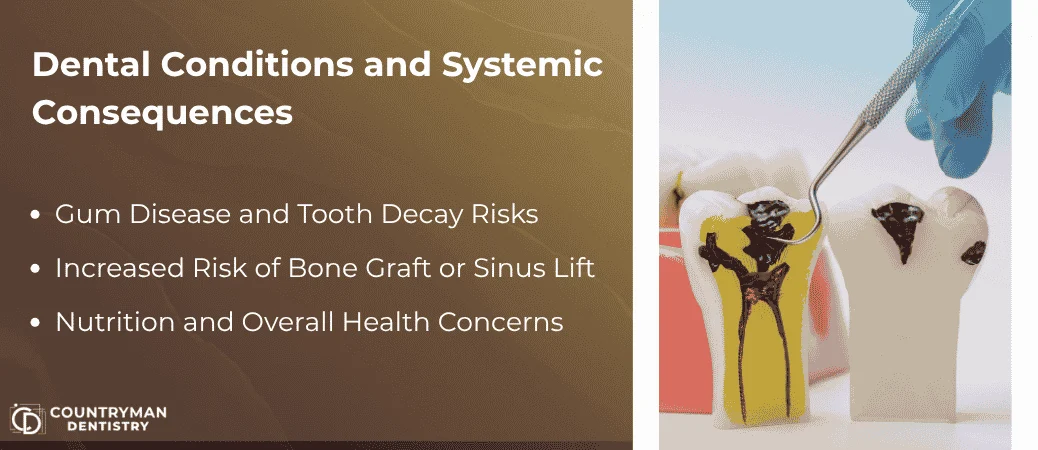
Gum Disease and Tooth Decay Risks
An empty space in your mouth traps food and plaque. You may find it harder to clean the area, especially if nearby teeth start to lean into the gap.
This raises your risk of periodontal and gum disease treatment. Inflamed gums can bleed, swell, and pull away from the teeth. Over time, infection can damage the bone that supports your teeth.
A missing tooth also shifts how you bite. The nearby teeth may tilt, creating tight spaces that hold bacteria. That makes tooth decay more likely.
Several dental groups explain the hidden risks of missing teeth and oral health impact, including higher rates of gum problems and further tooth loss. When one tooth goes untreated, others often follow.
Increased Risk of Bone Graft or Sinus Lift
Your jawbone needs pressure from chewing to stay strong. Once you lose a tooth, the bone in that area begins to shrink.
Bone loss can start within months. As the bone gets thinner, placing a dental implant becomes more complex.
If too much bone disappears, you may need a bone graft to rebuild support. For upper back teeth, bone loss near the sinus can require a sinus lift before an implant is possible.
Oral surgeons warn about the risks of delaying tooth replacement, including greater treatment complexity over time. Acting early can help you avoid extra procedures and higher costs.
Nutrition and Overall Health Concerns
When you miss even one tooth, your chewing function changes. You may chew on one side or avoid certain foods.
This lowers your chewing efficiency, especially for firm foods like raw vegetables, nuts, and lean meats. You might switch to softer, processed options that are easier to manage but lower in fiber and nutrients.
Poor chewing can also strain your jaw muscles and digestion. Large food pieces are harder for your stomach to break down.
Experts note that missing teeth can impact your health by affecting how you chew, speak, and maintain oral health. When you restore the gap, you support both your mouth and your overall nutrition.
Tooth Replacement Solutions and Their Benefits
You have several proven options to replace missing teeth. Each choice affects your comfort, cost, bone health, and how your bite functions over time.
Dental Implants: The Gold Standard
A dental implant replaces both the root and the visible part of your tooth. Your dentist places a small titanium post in your jawbone, then attaches an abutment and a custom crown on top.
Unlike removable dentures, implants stay fixed in place. They feel and function much like a natural tooth.
Implants can restore chewing ability, support jawbone health, and help stabilize nearby teeth. They also reduce the risk of bone loss because the implant post acts like a tooth root.
The process takes a few months. Your bone must heal and fuse to the implant before your dentist places the final crown.
With good brushing, flossing, and regular dental visits, many implants last for decades.
Comparing Bridges, Partials, and Dentures
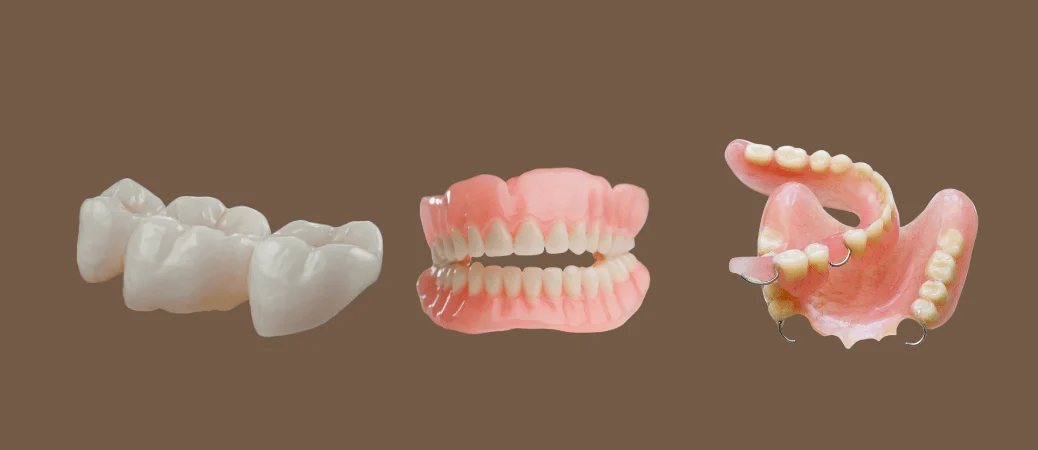
A dental bridge fills the gap by attaching an artificial tooth to the natural teeth next to it. Your dentist reshapes those nearby teeth to hold crowns that support the bridge.
Bridges stay fixed in your mouth. They cost less than many dental implants and usually take a few weeks, not months.
A partial denture is removable. It clips onto nearby teeth and can replace one or several missing teeth. A removable partial denture costs less upfront, but you must take it out for cleaning and at night.
If you are missing all teeth in an arch, a full denture or full dentures replace every tooth in the upper or lower jaw. These also rest on your gums and can shift while you eat or speak.
Each option fits different budgets and health needs. Your dentist will review your bone level, gum health, and the condition of nearby teeth before recommending treatment.
Implant-Supported and Bonded Bridge Options
An implant-supported bridge replaces several missing teeth in a row. Instead of placing one dental implant for every tooth, your dentist places two or more implants to hold a multi-tooth bridge.
This option avoids grinding down healthy natural teeth. It also provides more stability than removable dentures.
A bonded bridge, sometimes called a resin-bonded bridge, uses metal or ceramic wings that attach to the back of nearby teeth. Your dentist removes less enamel than with a traditional bridge.
Bonded bridges work best for front teeth with low biting pressure. They may not last as long as implants, but they offer a less invasive form of tooth replacement.
These options give you flexibility when you want added support without a full set of implants.
Preserving Bone and Maintaining Alignment
When you lose a tooth, your jawbone in that area begins to shrink. Without a root to stimulate it, the bone slowly breaks down.
Dental implants help preserve bone because they replace the root as well as the crown. This support keeps your jaw stronger over time.
If you leave the gap empty, nearby teeth can shift or tilt. The opposing tooth may also move down or up into the space. This can change your bite and make cleaning harder.
Dental bridges and well-fitted partial dentures help maintain spacing and alignment. They do not prevent bone loss as fully as implants, but they reduce unwanted tooth movement.
Choosing timely restorative dentistry protects more than your smile. It helps you maintain a stable bite and avoid more complex treatment later.
Financial and Emotional Costs of Waiting
When you delay replacing one missing tooth, the effects go beyond a simple gap. Costs rise as treatment becomes more complex, and stress can grow as changes in your mouth affect daily life.
How Procrastination Increases Treatment Complexity
When you first lose a tooth, replacing it is often simple. Your jawbone still supports an implant, and nearby teeth have not shifted much.
With delaying tooth replacement, your body starts to adapt. The jawbone in that area begins to shrink because it no longer receives pressure from a tooth root. Teeth next to the gap can tilt or drift.
These changes may lead to bite problems or even additional tooth loss. You may need orthodontic work or extra restorative care before your dentist can place an implant.
Several dental practices warn about the real cost of delaying a single tooth implant, including more complex treatment plans and higher long-term expenses. What started as one missing tooth can turn into a multi-step process.
Added Procedures and Extended Timelines
Time often adds procedures. If bone loss becomes severe, your dentist may recommend bone grafting to rebuild support for an implant.
Bone grafting adds healing time, often several months, before you can move forward. In some cases, you may also need a sinus lift for upper back teeth.
You may face:
- More office visits
- More imaging and exams
- Higher total fees
- A longer wait to fully restore your smile
Acting early can reduce the need for these added steps.
Longer treatment plans can also increase dental anxiety. You might worry about surgery or recovery, even though options like nitrous oxide or IV sedation can help you stay calm and comfortable.
Impact on Confidence and Quality of Life
A missing tooth does not only affect your mouth. It can affect how you feel about yourself.
You may avoid smiling in photos or speaking up in meetings. If the gap sits in the back, you might chew on one side, which can strain your jaw and limit what you eat.
Over time, shifting teeth or bite changes can alter how your face looks. Some dental providers describe the hidden costs of waiting to replace missing teeth as both financial and emotional.
When you restore your smile sooner, you often protect more than your teeth. You protect your comfort, your confidence, and your daily quality of life.
Frequently Asked Questions
A single missing tooth can affect your jawbone, nearby teeth, and long‑term costs. Acting sooner often means simpler treatment and fewer added procedures.
How long can I safely wait before replacing a missing tooth?
You can wait, but changes often begin within months. Bone shrinkage can start as early as the first few months after a tooth is removed.
By six to twelve months, you may notice more bone loss and slight tooth movement. After a few years, treatment may require extra steps like grafting.
Dentists often advise early replacement because delaying tooth replacement can increase complexity and may limit simpler options.
What problems can happen if I leave a gap from a missing tooth untreated?
A gap can lead to jawbone loss, shifting teeth, and bite problems. You may also notice changes in how your teeth meet when you chew.
Some dental practices warn about the risks of delaying tooth replacement such as gum issues and facial changes over time.
Even if the space does not bother you now, small changes can build up and affect your comfort and oral health.
Can a missing tooth cause my other teeth to shift over time?
Yes, your teeth naturally move toward empty spaces. Neighboring teeth may tilt or rotate into the gap.
The opposing tooth can also grow longer because it no longer has contact. This movement can change your bite and make cleaning harder.
Many dentists explain that one missing tooth can become a bigger problem when nearby teeth shift and trap food.
Will delaying tooth replacement lead to jawbone loss, and how fast does that happen?
When you lose a tooth, the bone that supported it no longer gets regular pressure from chewing. Your body begins to break down that unused bone.
Bone loss can start within the first few months. The longer you wait, the more bone can shrink.
Some dental offices describe the dangers of delaying missing tooth replacement as gradual jawbone deterioration that may require grafting before placing an implant.
What are the most common options to replace one missing tooth?
You can replace one tooth with a dental implant, a fixed bridge, or a removable partial denture.
A dental implant places a small post in the jawbone and adds a crown on top. A bridge uses the teeth next to the gap for support.
Each option has pros and limits. Your dentist will look at your bone level, gum health, and budget before you choose.
How much more expensive can treatment become if I wait too long to replace a missing tooth?
Costs can rise if you need added procedures such as bone grafting or sinus lifts. These steps rebuild lost bone so an implant can stay stable.
Some clinics discuss the health and financial impact of delaying a single tooth implant and note that added treatment increases time and expense.
Early replacement often keeps the plan simpler. Fewer procedures usually mean lower total cost and fewer visits.