Understanding the wisdom teeth removal recovery timeline can help you recognize normal healing and know when to contact your dentist.
Soreness, swelling, and jaw stiffness typically increase during the first two to three days after surgery before gradually improving.
The trend across several days tells you more than how you feel on any one morning. A sore day 3 fits the usual pattern. Pain that eases and then suddenly gets worse does not, and it deserves a call to your dentist.
Your surgeon’s post-operative instructions come first, because they are based on your surgery and your health.
The day-by-day notes below give you a general picture, along with clear signs that mean it’s time to pick up the phone.
Key Takeaways
- Swelling and soreness tend to peak on days 2 and 3, then ease.
- Pain that gets worse after improving, fever, or heavy bleeding needs a prompt call.
- Feeling better by day 7 does not mean the sockets have fully healed.
What Should You Expect Each Day During the First Week?
Most wisdom teeth recovery follows a curve: numbness and light bleeding on day 1, rising swelling on days 2 and 3, and steady relief from day 4 onward.
Treat these days as rough markers. A harder wisdom tooth extraction can shift everything a day or two later.

Day 1: Clot Formation, Light Bleeding, and Numbness
A blood clot forms in each socket within the first hours. This clot covers the bone and nerves and is the base for all healing that follows. Your main job today is to protect it.
Light oozing is expected. A little blood mixed with saliva looks like a lot more than it is, so pink-tinged spit is no cause for alarm. Bite down on gauze with steady pressure as your surgeon showed you.
Your lips, tongue, or cheek may stay numb for several hours. Pain often shows up as the numbness wears off. Many patients find it helps to take the first dose of pain medicine before that happens, if your surgeon approves.
Day 2: Increasing Swelling and Jaw Soreness
Your cheeks will likely look fuller today than right after surgery. That surprises a lot of people, but rising swelling on day 2 is part of the normal healing response.
Your jaw may feel tight and sore. The muscles held your mouth open during surgery, and they need time to relax. Don’t force your mouth wide open to test it.
Bleeding should be slowing down. Keep your head raised on an extra pillow when you rest to help with throbbing.
Day 3: Swelling and Discomfort May Still Peak
For many people, day 3 is the hardest day. Swelling, bruising, and stiffness can all reach their highest point now. Bruising may turn yellow, purple, or blue along your jaw, especially after lower teeth are removed.
What you want to see is leveling off. If your pain medicine still keeps you fairly comfortable, you are on track. Pain that breaks through your medicine or keeps climbing past this point is worth a call.
Day 4: Symptoms Usually Begin to Ease
Day 4 often brings the first real relief. Swelling starts to go down, and you may need less pain medicine.
Bruising can still look dramatic even while the tissue underneath heals. Color changes on your skin lag behind the healing inside your mouth.
This is also when a problem can stand out. If your pain improved and then turns deep and throbbing again, pay attention.
Day 5: Eating and Opening Your Mouth Get Easier
By day 5, you can probably open wider and talk more easily. Soft meals feel less like work. You may still feel tender when you chew, so keep chewing on the side away from the sockets.
Many people feel ready for light daily tasks now. Go slowly and rest when you feel tired, since your body is still putting energy into healing.
Day 6: More Comfort, but Continued Precautions
Day 6 often feels close to normal. That is exactly when people get careless. A straw, a crunchy snack, or a hard rinse can still irritate a healing socket.
If you have dissolvable stitches, you may notice they feel loose or that small bits come away. That is expected. Avoid pulling at them with your tongue.
Day 7: Feeling Better Does Not Mean Fully Healed
By the end of the first week, many patients notice significantly less swelling and soreness, along with improved jaw movement. Recovery may take longer after complex or impacted wisdom tooth removal.
The extraction sites may still have visible openings at this stage. Gum tissue takes longer to heal than postoperative discomfort, and the appearance of each socket depends on the extraction and how the site was closed.
Which Symptoms Mean You Should Call Your Dentist?
Call your dentist if pain gets worse after it started to improve, or if you notice fever, pus, heavy bleeding, or numbness that won’t fade.
Trouble breathing or swallowing goes straight to emergency care. The details below help you tell normal healing from a problem.
How Does Dry Socket Differ from Expected Soreness?
Dry socket, also called alveolar osteitis, occurs when the protective blood clot fails to form properly or breaks down prematurely.
This can leave the underlying bone exposed and cause significant pain during the first several days after extraction.
Normal soreness peaks and then fades. Dry socket feels different:
- Pain that gets worse around days 3 to 5 after it had been improving
- A deep, throbbing ache that can spread toward your ear
- A bad taste or bad breath
- An empty-looking socket where you may see bone
Don’t try to pack or treat the socket yourself. Dry socket is treatable, and your dentist can place a soothing dressing. If the pain is intense, it’s reasonable to look for a dentist who handles severe tooth pain the same day.
When Could Fever, Pus, or Worsening Swelling Indicate Infection?
Swelling that keeps growing after day 3 is a warning sign. So is a fever, pus near the socket, or a foul taste that won’t rinse away.
A pale yellow or white layer in the socket can be normal healing tissue. Pus is thicker, may drain, and often comes with more pain and swelling.
If an infection is diagnosed, your dentist may recommend antibiotics or additional treatment, depending on the findings.
Take any prescribed antibiotics exactly as directed and contact your dentist if symptoms worsen or you experience side effects.
What Should You Do About Persistent Bleeding or Numbness?
Bleeding that fills your mouth and doesn’t slow with firm gauze pressure needs a call. Sit up, place fresh gauze, and bite down steadily for 30 minutes before you check again.
Lifting the gauze every few minutes keeps the clot from setting.
Numbness from local anesthesia usually fades within several hours, although the duration depends on the anesthetic used.
Contact your surgical team if numbness persists beyond the expected period, continues into the next day, or worsens.
When Do Breathing or Swallowing Problems Require Emergency Care?
Trouble breathing or swallowing is an emergency. Swelling that spreads into your neck or under your tongue can narrow your airway.
Call 911 if you have trouble breathing or other signs of a life-threatening emergency. Seek immediate medical care for difficulty swallowing or rapidly spreading swelling.
For severe dental pain without these warning signs, contact our emergency dentistry team to discuss your symptoms and confirm the earliest available appointment. Heavy bleeding that does not stop with firm pressure may require emergency medical care.
How Can You Protect the Extraction Sites While Healing?
Your post-operative instructions are built around one goal: keeping the blood clot in place. Gentle habits around gauze, suction, pain control, and cleaning do most of the work in wisdom teeth removal recovery.
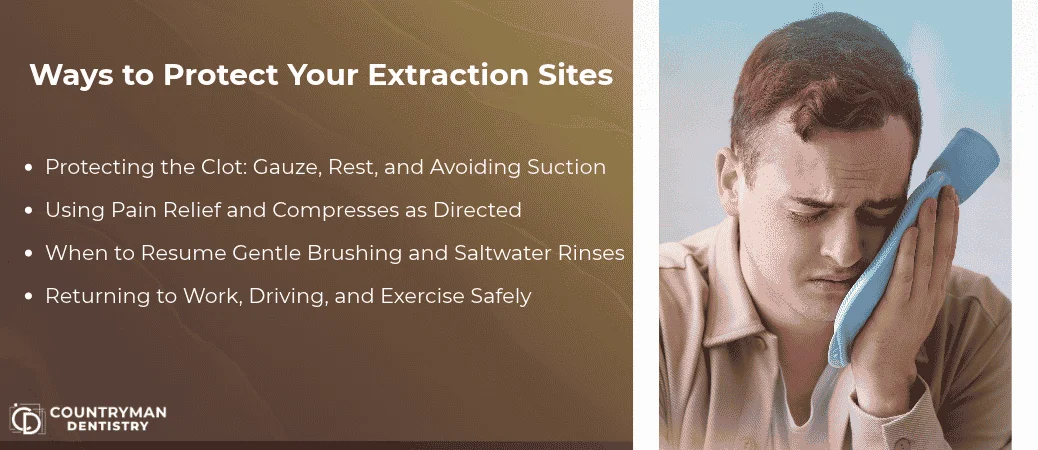
Protecting the Clot: Gauze, Rest, and Avoiding Suction
Bite on gauze with firm, steady pressure. Change it when it’s soaked through.
Anything that creates suction can pull the clot loose. Skip these during the first several days:
- Drinking through a straw
- Smoking or vaping
- Spitting hard
- Poking the socket with your tongue or fingers
Smoking increases the risk of dry socket after tooth extraction. A systematic review of smoking and dry socket found that smokers had more than three times the odds of developing this complication compared with nonsmokers.
Avoid smoking during recovery and follow your surgeon’s instructions about when it is safe to resume.
Using Pain Relief and Compresses as Directed
Take pain medicine exactly as your surgeon directed. Many surgeons suggest ibuprofen, acetaminophen, or both.
Follow the recommended medication doses and avoid taking aspirin for postoperative pain unless your surgeon advises it.
If you take prescribed aspirin or another blood-thinning medication for a medical condition, do not stop it without guidance from your healthcare provider.
When to Resume Gentle Brushing and Saltwater Rinses
Skip rinsing for the first 24 hours unless your surgeon instructs otherwise. You can usually brush your other teeth that first evening while keeping the toothbrush away from the extraction sites.
Once healing progresses, continue your regular preventive dental care to maintain healthy teeth and gums.
Returning to Work, Driving, and Exercise Safely
Plan on at least a day or two off work or school. If your job is physical, you may need more time.
If you receive IV sedation or general anesthesia, arrange for a responsible adult to drive you home.
Avoid driving for the period specified by your surgical team, commonly at least 24 hours, and do not drive while taking medications that impair alertness or reaction time.
What Can You Eat as the Week Progresses?
Your wisdom teeth recovery diet moves from cool, smooth foods to soft meals and then toward your usual food as chewing gets comfortable. Let pain guide each step. If something hurts, back off for a day.
Days 1–2: Cool or Lukewarm Foods That Need Little Chewing
Wait until the numbness is gone before you eat, so you don’t bite your cheek or burn your mouth. Good choices include:
- Yogurt or cottage cheese
- Applesauce
- Pudding
- Smoothies eaten with a spoon
- Broth or blended soup, cooled to lukewarm
Keep portions small. Avoid hot drinks and hot soup, which can disturb the clot.
Days 3–4: Adding More Substantial Soft Foods
Your body needs protein to heal, so add foods with more substance. Try scrambled eggs, mashed potatoes, oatmeal, soft pasta, or hummus.
Warm is fine now, but not steaming. Chew with your front teeth or the side away from the sockets. Rinse gently with salt water after you eat.
Days 5–7: Advancing Your Diet Without Irritating the Sockets
You can move to soft versions of your normal meals. Flaky fish, shredded chicken, ripe bananas, avocado, and soft bread without a hard crust all work well.
Keep avoiding foods that break into sharp bits or get stuck:
| Avoid for now | Why |
| Chips, nuts, popcorn | Sharp pieces lodge in the socket |
| Rice, seeds, quinoa | Small grains are hard to rinse out |
| Steak, gummy candy | Hard chewing near the wound |
| Spicy or acidic foods | They sting healing tissue |
Bring firmer foods back one at a time. If food keeps packing into a socket, go back to softer meals for a few days.
Why Might Healing Continue Beyond the First Week?
Healing continues beyond day 7 because pain fades quickly while gum healing and bone healing take much longer. How hard your surgery was also changes your timeline.
How Impacted Teeth and Extraction Complexity Affect Recovery
Impacted wisdom teeth sit under the gum or in bone. Removing them often means more work on the gum and bone than routine tooth extractions require.
That usually brings more swelling and a longer recovery, sometimes up to two weeks.
Removing multiple wisdom teeth at once may increase postoperative soreness. Lower wisdom teeth can require more complex surgery, particularly when they are deeply impacted or surrounded by dense bone.
Recovery depends on the position of the teeth, root anatomy, and extent of surgery.
What to Expect from Dissolvable Stitches and Open-Looking Sockets
Dissolvable stitches soften and fall out on their own. The timing depends on the material your surgeon used, so you may notice them loosen anywhere in the first couple of weeks.
The sockets will look like holes for a while. Food can drift in, which is why gentle rinsing after meals helps. An open-looking socket does not mean healing has stalled.
Why Gum Closure and Bone Repair Follow Different Timelines
Gum tissue grows over the socket over the following weeks. A small dip or opening may still be visible at three or four weeks.
Beneath the gums, new bone gradually fills the socket and continues remodeling for months.
Keep any recommended postoperative appointments to monitor healing, and maintain your regular dental checkups to protect your long-term oral health.
Look for Steady Improvement, Not Perfect Daily Progress

Your recovery is on track when each few days feel better than the last, even if one day feels worse than you hoped.
Swelling peaking on day 2 or 3 fits the pattern. A sudden turn for the worse after you started to improve does not.
Use this simple check each evening:
- Is my pain the same or lower than two days ago?
- Is the swelling going down after day 3?
- Is bleeding fading to light pink or stopping?
- Can I open my mouth a little wider than before?
If your symptoms are gradually improving, continue following your post-operative instructions.
Contact your dentist if pain or swelling worsens after initially improving, bleeding persists, or you develop fever, pus, or prolonged numbness.
Patients at Countryman Dentistry are encouraged to call with any question during that first week, because a quick check is easier than guessing.
If you’re still planning surgery, read up on wisdom teeth removal aftercare and stock soft foods before your appointment.
Frequently Asked Questions
What is usually the worst day of wisdom tooth recovery?
Day 2 or day 3 is the hardest for most people. That is when swelling, stiffness, and bruising reach their peak. After that, symptoms should start to ease.
How should I feel one week after wisdom teeth removal?
At one week, you should have mild swelling and soreness at most, with much easier jaw movement. Some tenderness while chewing is common. The sockets will still look open, since gum tissue takes longer to close.
Can I eat normally on day 7 after wisdom teeth removal?
You can eat most soft foods by day 7, but hold off on crunchy, hard, and sticky foods. Chips, nuts, and seeds can still lodge in the sockets. Add firmer foods one at a time once chewing feels comfortable.
Can dry socket develop on day 7?
Dry socket most often appears between days 3 and 5, so a new case on day 7 is less common.
Any pain that suddenly gets worse, throbs toward your ear, or comes with a bad taste still deserves a call. Your dentist can check the socket and treat it.
How can I support faster recovery without disturbing the blood clot?
Rest, drink plenty of water from a cup, and eat soft foods with protein. Skip straws, smoking, and hard spitting for the first several days. Use gentle saltwater rinses after 24 hours and follow your surgeon’s instructions on medicine and activity.