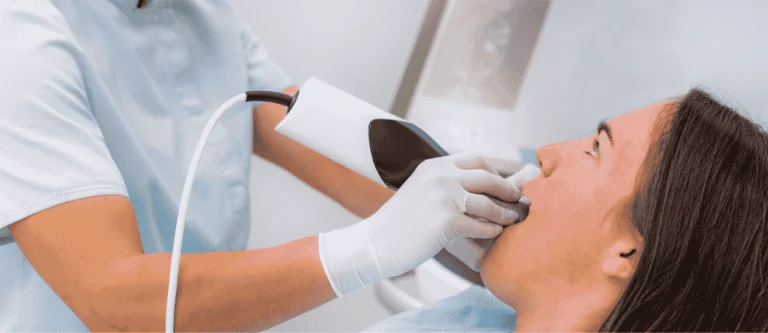
Knowing what to do during a weekend dental emergency can help you protect your teeth and avoid unnecessary delays in treatment.
If you experience a dental emergency in Plano, TX, contact your regular dentist for after-hours guidance and confirm when you can be seen.
While you arrange care, protect the affected tooth and use pain medicine only as directed on the label or by your clinician.
A small, painless chip might wait for the next available visit after telephone advice. A knocked-out permanent tooth needs immediate attention.
Can You Wait Until Monday, or Do You Need Help Now?
You need prompt help for severe or worsening symptoms, an injured permanent tooth, or signs of infection. Your decision to wait until Monday should follow a dental professional’s assessment of your symptoms.
Which Dental Problems Need Prompt Weekend Attention?
Call for urgent dental advice if you have a severe toothache that disrupts sleep or eating, especially when label-directed pain medicine gives little relief.
Describe any swelling, fever, drainage, or bad taste, which might point to a tooth infection.
You also need prompt assessment for a dental injury involving loose teeth, a tooth pushed out of place, or a deep break. Avoid testing a loose tooth with your fingers or tongue.
When you call about severe tooth pain, explain whether it is constant or triggered by biting. Report when it began and whether it is getting worse.
When Should You Go to the ER Instead of Waiting for a Dentist?
Go to the ER for difficulty swallowing, rapidly increasing facial or neck swelling, or swelling near your eye. Call 911 if you have trouble breathing or another potentially life-threatening symptom.
Seek emergency medical care for a suspected broken jaw, major facial trauma, or heavy bleeding that continues despite firm pressure with clean gauze. If you feel faint or seriously ill, have someone help you get care.
For tooth pain without these warning signs, contact a dentist for treatment of the tooth itself. Keep watching for changes while you wait.
How Can You Find Weekend Dental Care in Plano?
Start with your regular office’s emergency instructions, then call other dental clinics if you cannot reach a clinician or secure suitable care. Confirm that a dentist is available to examine you before you leave home.

Check Your Regular Dentist’s After-Hours Instructions First
Call your regular Plano dentist and listen to the full voicemail message. Check the practice website for an emergency number or instructions for established patients.
If you receive a callback option, leave your name, phone number, and a brief description of the problem. Mention swelling, fever, uncontrolled pain, or a recent injury early in your message.
If you need urgent dental care, contact Countryman Dentistry to discuss your symptoms and confirm the earliest available appointment. Weekend and after-hours availability should be confirmed directly with the office.
If you receive care at Countryman Dentistry, check the office’s current contact instructions when you need emergency dentistry. Confirm the available appointment directly with the team.
Call Before Visiting a Weekend or Walk-In Dental Clinic
When you contact an emergency dentist in Plano, TX, ask whether a dentist is physically available that day. An office advertising after-hours dentistry might require an appointment or have limited emergency slots.
Before traveling, confirm:
- Whether the dental clinic accepts new emergency patients.
- Whether it treats your specific problem and age group.
- Your appointment time and the correct address.
- Whether the visit includes treatment or an initial assessment only.
- What to do if your symptoms worsen before arrival.
Ask a weekend emergency dentist about urgent dental care options nearby if the office cannot accommodate you.
Does a 24-Hour Phone Line Mean a Dentist Is Available?
A 24-hour phone line means you can reach that service around the clock; it does not guarantee an open dental office. You might reach a scheduling team or an answering service.
Ask, “Am I speaking with a clinical team, and when could a dentist examine me?” Request a confirmed time and location before arranging transportation.
If the service only takes messages, continue seeking clinical advice when your symptoms require prompt attention. Avoid treating a callback request as a booked appointment.
What Can You Do Safely While Waiting for an Appointment?
Use gentle cleaning, protect damaged teeth, and follow medication directions while you arrange treatment. Your temporary care should reduce discomfort without delaying an urgent assessment.
Manage Tooth Pain Without Unsafe Home Remedies
For a toothache, rinse gently with warm water and carefully floss if food is trapped between your teeth. Use a cold pack wrapped in a cloth against the outside of your cheek, with breaks to protect your skin.
If you can safely take an over-the-counter pain reliever, follow its label. Ask a pharmacist first if you are pregnant, take blood thinners, or have kidney disease, liver disease, stomach ulcers, or medication allergies.
Avoid these unsafe steps:
- Placing aspirin directly against your tooth or gums.
- Taking extra doses because your tooth pain continues.
- Combining products with the same active ingredient.
- Using leftover antibiotics or someone else’s prescription.
- Popping or squeezing a swollen area.
Protect a Chipped, Cracked, or Broken Tooth
Rinse gently and avoid biting on a chipped tooth, cracked tooth, or broken tooth. Cover a sharp edge with dental wax if needed, and save any fragments in a clean container with milk.
If you have broken teeth with strong sensitivity, a deep visible break, or pain when biting, ask for prompt assessment.
Your need for chipped tooth emergency treatment depends on the depth of the damage and any injury inside the tooth.
For a knocked-out permanent tooth, hold it by the crown, the part normally visible above your gum. Rinse gently if dirty, without scrubbing the root.
Gently replace it in its socket if you can do so easily and safely; otherwise, keep it in milk and seek immediate dental care.
Never reinsert a baby tooth. Avoid holding a loose tooth inside a young child’s mouth because of the choking risk.
Keep a Lost Crown, Filling, or Damaged Denture Safe
Put a lost crown or filling in a clean, secure container and bring it with you. Avoid chewing on the exposed tooth, and ask the dental team whether a pharmacy temporary dental repair product is appropriate.
If you use temporary dental cement, follow its directions. Never force a crown into place or use household glue; keep a loose crown out of your mouth if it will not stay secure.
If your dental crown breaks, save every piece you can find. For damaged dentures, remove the appliance if it cuts your mouth or feels unstable, keep all pieces, and avoid home gluing or filing.
Avoid Further Injury While Eating and Cleaning Your Teeth
Choose soft foods and chew on the unaffected side. Avoid hard or sticky foods, along with very hot or cold drinks if they trigger sensitivity.
Brush gently with fluoride toothpaste and clean around the area without poking into a break or exposed cavity. If floss catches beneath a loose crown, stop pulling on it and ask the dental team for instructions.
Keep your saved dental pieces somewhere secure. You should not delay urgent care while searching for a missing fragment.
What if No Dentist Can See You This Weekend?
Ask for telephone triage, book the earliest appropriate appointment, and get clear instructions for any change in symptoms. If you cannot reach a dentist, use medical services when your condition requires assessment.
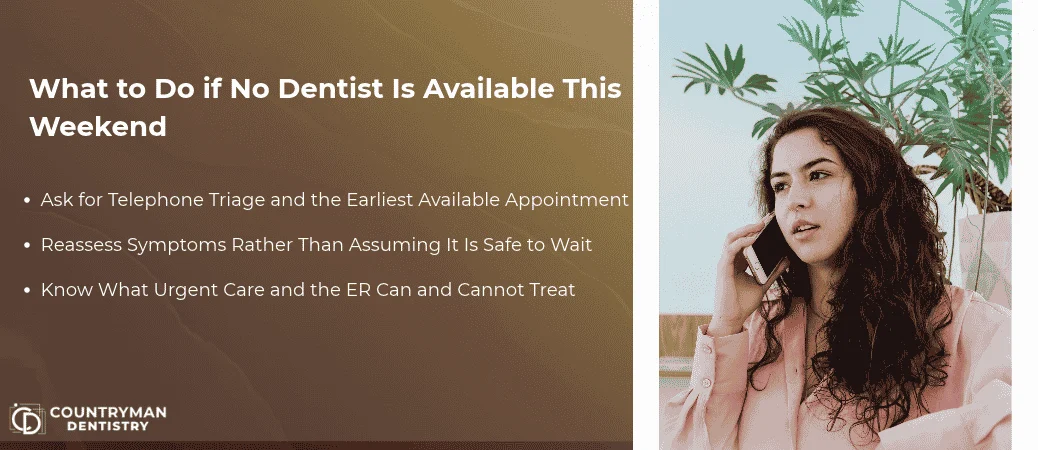
Ask for Telephone Triage and the Earliest Available Appointment
Explain that you need help deciding how long you can safely wait. Ask whether a dentist can review your symptoms by phone and whether the office keeps a cancellation list.
A virtual dental consultation offers a way to discuss symptoms when that service is available. You still need an in-person exam if your problem requires X-rays or treatment.
Before ending the call, write down your appointment details and the advice you received. Ask whom you should contact if the office closes before your condition changes.
Reassess Symptoms Rather Than Assuming It Is Safe to Wait
Check for new swelling, fever, worsening pain, or difficulty opening your mouth while you wait. Contact the clinical team again if your symptoms change after the first conversation.
Tell the dentist if a severe toothache suddenly stops or a swollen gum begins draining. Those changes do not establish that the problem has healed.
If an emergency dentist advised waiting under certain conditions, follow those conditions closely. Seek a fresh assessment when your symptoms move beyond that advice.
Know What Urgent Care and the ER Can and Cannot Treat
At urgent care, you can receive a medical assessment for symptoms such as fever or pain when dental care is unavailable. Call ahead to ask what dental-related problems the location evaluates.
At the ER, you can receive care for dangerous swelling, serious injury, or other medical complications. Dental services vary by hospital, and routine restorative work or root canal treatment generally requires a dental office.
After medical treatment, keep your emergency dental care appointment. If you receive antibiotics, take them exactly as prescribed and arrange treatment for the cause of the infection.
What Should You Prepare for Your Emergency Visit?
Bring a clear symptom history, your medication details, and any saved dental pieces so your team can assess you efficiently. Ask about costs before treatment and leave with a follow-up plan.
Bring Your Symptom Timeline, Medication List, and Saved Dental Pieces
Write down when the problem began, what makes it hurt, and how it has changed. Include any injury and the time it occurred.
Bring these items if you have them ready:
- Photo identification and dental insurance details.
- Your medication list, including supplements and allergies.
- The name, amount, and time of each pain medicine you have taken.
- Relevant medical history and your regular dentist’s contact information.
- Your saved crown, tooth fragments, or damaged appliance.
Keep a knocked-out tooth moist during travel. Tell the team right away if you take blood thinners or have a condition that affects healing.
Ask About Exam Fees, Insurance, and Payment Options
Ask what the emergency dental exam costs and whether X-rays have a separate fee. Confirm whether the office accepts your dental insurance and whether it is in-network for your specific plan.
Request a written estimate before emergency dental treatment begins. If you need payment arrangements, ask about available options and their terms.
If your appointment is at Countryman Dentistry, review the practice’s financing and insurance options and confirm the details directly with the office.
Keep the estimate and your treatment instructions together for follow-up.
Understand Why Temporary Relief May Need Follow-Up Treatment
Your first visit might focus on reducing pain or protecting the tooth.
At Countryman Dentistry, Dr. Bryan Countryman can evaluate the damage and explain whether additional treatment is needed to restore the tooth and protect your oral health.
Depending on your exam, you might need tooth-colored fillings, a crown, or root canal therapy to treat tissue inside the tooth.
If your tooth cannot be saved, your dentist will discuss tooth extraction and appropriate replacement options.
Dental implants require separate planning after an assessment of healing and bone support.
Ask whether your family dentist will handle follow-up or whether you need a specialist, such as a periodontist for gum or supporting-bone concerns.
Protect Your Tooth and Arrange the Earliest Appropriate Care

Your next step is to contact a dentist in Plano, TX, describe your symptoms, and secure the earliest appointment that fits your clinical needs. While you wait, protect the affected area and follow the advice you receive.
Keep your appointment even if pain improves. If you develop breathing or swallowing trouble, rapidly spreading swelling, or serious bleeding, seek emergency medical care immediately.
Frequently Asked Questions
You should base weekend dental decisions on your symptoms and clinical advice, with confirmed appointment details before you travel.
What qualifies as a dental emergency over the weekend?
You need urgent dental advice for severe pain, swelling, a knocked-out permanent tooth, or teeth loosened by an injury.
If your dental emergency includes breathing trouble or rapidly spreading swelling, seek emergency medical care immediately.
What should I do if I need a dentist on Sunday in Plano?
Call your regular office’s after-hours number, then contact an emergency dentist in Plano if you cannot arrange care. Confirm that a dentist is available on Sunday and get an appointment time before leaving.
Can a lost crown or filling wait until Monday?
You might be advised to wait until Monday if you have mild sensitivity, no swelling, and no further tooth damage. Ask for telephone advice, protect the exposed tooth, and report any worsening symptoms.
Should I go to urgent care if no dentist is available?
You can seek urgent care for a medical assessment when you cannot reach a dentist, especially if you have fever or feel unwell. For difficulty breathing or swallowing, major trauma, or rapidly spreading swelling, use emergency medical services.
Is the 3-3-3 rule for toothache safe while waiting for an appointment?
You should avoid following an online “3-3-3” toothache regimen without advice from your clinician or pharmacist.
The phrase is used for repeated ibuprofen dosing that might exceed the product’s over-the-counter directions; follow your label and get advice if pain remains uncontrolled.