A chipped tooth can happen in seconds during a meal, a fall, or even while sleeping. You might wonder if you need to call the dentist right away or if it can wait.
The answer depends on whether you have pain, bleeding, visible damage to inner tooth layers, or swelling, these signs indicate you need same-day care, while small painless chips without sharp edges can usually be scheduled within a few days.
Not all tooth damage looks the same. A chipped tooth usually involves just a small piece of enamel and may not hurt at all, while a cracked tooth often has a fracture line that causes sharp pain when you bite down.
Understanding the difference helps you make the right choice about when to seek treatment.
Your tooth cannot heal itself. Whether you need emergency care or a cosmetic repair, getting professional help prevents small problems from turning into bigger ones.
This guide will walk you through the warning signs, immediate steps to take, and what to expect from treatment.
Key Takeaways
- Pain, bleeding, visible inner tooth layers, or swelling mean you need emergency dental care the same day
- Small painless chips without sharp edges are usually cosmetic issues that can wait a few days for treatment
- Taking immediate action like rinsing gently and saving broken pieces in milk protects your tooth until you see a dentist
Get fast chipped tooth emergency treatment and protect your smile with expert care today
How to Tell If Your Tooth Damage Is an Emergency
Not all tooth injuries need the same level of urgency. Some situations require immediate dental care, while others can wait for a regular dental checkup.
Key Differences: Chipped, Cracked, and Broken Teeth
A chipped tooth usually involves a small piece breaking off, often from the edge or corner. These chips might be tiny or more noticeable, but they typically don’t go deep into the tooth structure.
A cracked tooth has a line or split that can run in different directions. The crack might be shallow and only affect the outer layer, or it could extend deeper toward the root.
You might not always see a crack with your eyes, but you’ll often feel it when biting down.
A broken tooth means a larger portion has come off, exposing more of the inner tooth. This type of tooth fracture often reveals the sensitive inner layers and can happen from trauma or biting something hard.
Understanding the difference between these types of damage helps you decide your next steps.
The severity of any tooth injury depends on how much structure you’ve lost and whether the inner tooth is exposed.
Warning Signs That Require Immediate Dental Care
Sharp pain that doesn’t go away signals a dental emergency. This pain means the crack or break has likely reached the inner layers of your tooth where the nerves live.
Uncontrolled bleeding from your tooth or gums needs attention right away. Apply gentle pressure with clean gauze, but if bleeding continues for more than 10 minutes, contact an emergency dentist in Plano, TX.
Other urgent signs include:
- Visible tooth structure missing with exposed inner layers
- Swelling around the damaged tooth or in your jaw
- Difficulty biting or chewing without intense discomfort
- Jagged edges that cut your tongue or cheek
- Fever developing after the tooth injury
Severe pain, bleeding, swelling, or visible structural damage means you should contact a dentist as soon as possible. These symptoms suggest the damage goes beyond cosmetic concerns.
When a Minor Chip Can Wait
A minor chip on the edge of your tooth that doesn’t hurt usually isn’t an emergency. Small chips that don’t affect the inner tooth structure can often be addressed during a regular dental visit.
You can probably wait if your chipped tooth has these features:
- No pain or sensitivity
- Smooth edges that don’t bother your tongue
- No bleeding
- Only affects the tooth’s appearance
A small chip that doesn’t disrupt your oral function but affects your smile’s appearance can be fixed with bonding or contouring at your convenience.
Still, you should schedule an appointment within a few days to prevent the damage from getting worse.
Even minor tooth damage needs professional evaluation. What looks small on the surface might hide a larger crack underneath.
Schedule your chipped tooth emergency treatment in Plano, Texas for immediate dental care
Common Causes and Risk Factors for Tooth Damage
Teeth can become chipped or cracked through sudden impacts, daily habits, or gradual wear over time.
Understanding what puts your teeth at risk helps you protect them from damage that could require emergency care or cosmetic treatment.

Accidents, Falls, and Sports Injuries
Physical impacts are among the most common reasons for dental trauma. A fall on a hard surface, a car accident, or a collision during sports can cause immediate tooth damage.
Contact sports like football, hockey, and basketball put your teeth at particular risk. Even non-contact activities like skateboarding or cycling can lead to facial injuries if you fall.
Athletes who don’t wear mouthguards are 60 times more likely to experience tooth damage during play.
Accidents at home or work also frequently result in chipped or cracked teeth. Tripping on stairs, slipping in the bathroom, or bumping into objects can cause your mouth to hit a hard surface.
Children are especially vulnerable to these types of injuries as they learn to walk and play.
Biting Hard Foods and Everyday Habits
What you eat and how you use your teeth throughout the day can gradually weaken them or cause sudden breaks. Biting hard objects is a frequent cause of tooth chips and cracks.
Hard foods that commonly damage teeth include:
- Ice cubes
- Popcorn kernels
- Hard candy
- Nuts in shells
- Bone fragments in meat
Using your teeth as tools creates unnecessary stress on your enamel. Opening packages, tearing tags, holding items, or biting your nails can all lead to tooth damage.
These habits apply pressure to your teeth in ways they weren’t designed to handle, making chips and cracks more likely over time.
Bruxism and Teeth Grinding
Teeth grinding, also called bruxism, wears down your tooth enamel and creates tiny fractures that can eventually become larger cracks.
Many people grind their teeth at night without realizing it, putting constant pressure on their teeth for hours.
Stress and anxiety are major triggers for bruxism. When you’re tense, you may clench your jaw or grind your teeth both during sleep and while awake.
This repetitive motion weakens your teeth over time, making them more vulnerable to chipping.
Tooth damage from grinding often affects multiple teeth rather than just one. You might notice worn, flat surfaces on your teeth or increased sensitivity.
A dentist can fit you with a nightguard to protect your teeth while you sleep.
Dental Decay and Old Restorations
Tooth decay weakens your tooth structure from the inside out, making chips and cracks more likely even from normal chewing. Cavities create soft spots in your teeth that can’t withstand the same pressure as healthy enamel.
Old fillings, crowns, and other dental work can fail over time. The materials wear down, or new decay can form around the edges of restorations. When this happens, your tooth loses structural support and becomes prone to breaking.
Teeth with large fillings are particularly vulnerable because less natural tooth structure remains. A cracked cusp can lead to serious dental issues if the tooth breaks around an existing restoration.
Regular dental checkups help catch decay and failing restorations before they cause major tooth damage.
Start your virtual consultation for chipped tooth concerns in Plano, Texas today
First Aid: What to Do Immediately After a Tooth Injury
Acting fast after a tooth injury can protect your tooth and reduce pain. Rinse your mouth with warm water, preserve any broken pieces, and control bleeding while you contact an emergency dentist.
Saving Tooth Fragments and Managing Bleeding
Find and save any tooth fragments you can locate. These pieces might help your dentist repair your broken tooth, so handle them carefully by the crown (the white part you see when you smile) rather than the root.
Rinse each fragment gently with warm water. Don’t scrub or use soap on them. Place the pieces in a small container filled with milk, saliva, or a tooth preservation solution.
For a knocked-out tooth, try to place it back in the socket if possible without touching the root. If you can’t reinsert it, keep it between your cheek and gums or in milk until you reach the dentist.
Stop any bleeding by applying gentle pressure with clean gauze or a damp tea bag. Hold the compress against the injured area for 10 to 15 minutes.
If bleeding continues after 20 minutes or seems heavy, you need immediate dental care or should visit an emergency room.
Temporary Comfort Solutions
Rinse your mouth with warm water right after the injury to clean the area. This removes blood and debris that could cause infection.
Apply a cold compress to your face near the injured tooth for 10 minutes at a time. This reduces swelling and numbs pain. Use a cloth between the ice pack and your skin to prevent ice burn.
If you have sharp edges causing irritation, dental wax from a pharmacy can cover them temporarily. Roll a small piece into a ball, flatten it slightly, and press it over the rough spot. This protects your tongue, cheek, and lips from cuts.
Over-the-counter pain relievers like ibuprofen can help manage discomfort until your dental appointment. Never put aspirin directly on your gums as it burns tissue.
Avoiding Further Tooth Damage
Stay away from eating on the side of your mouth with the damaged tooth. Hard, crunchy, or sticky foods can make the crack worse or break off more of the tooth.
Don’t chew ice, popcorn kernels, hard candy, or other hard items that could cause additional damage. These foods put extra pressure on an already weakened tooth.
Skip very hot or cold foods and drinks if your tooth feels sensitive. Temperature changes can cause sharp pain and might worsen existing cracks.
Avoid using your teeth as tools to open packages or bottles. This bad habit can turn a small chip into a serious break that might require tooth extraction.
Keep the area clean by gently brushing around the damaged tooth, but don’t apply pressure directly to the injury.
Contact a dentist within 24 hours even if the pain seems mild, as some cracks need quick treatment to prevent bigger problems.
Treatment Options for Chipped, Cracked, or Broken Teeth
Dentists can fix damaged teeth using several methods depending on how severe the break is.
Minor chips often need simple cosmetic fixes, while deeper cracks or fractures may require more extensive dental work to protect the tooth and prevent infection.
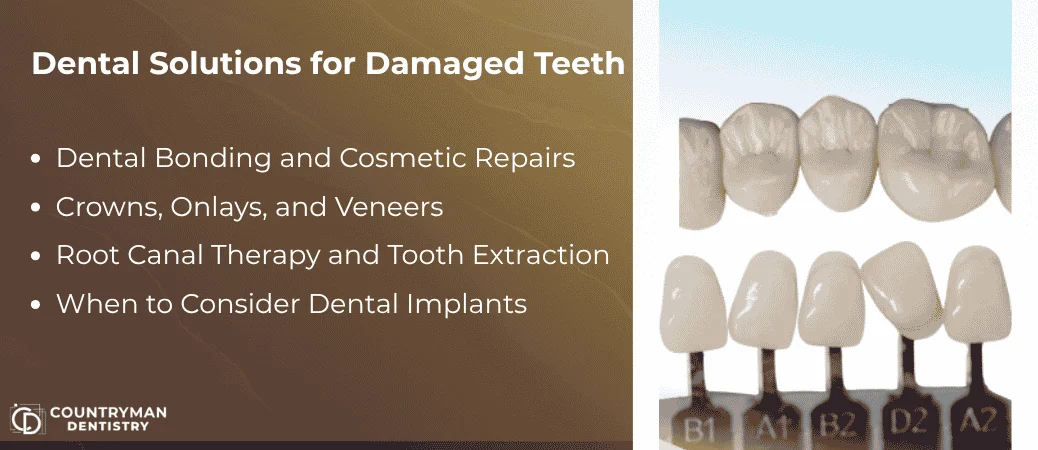
Dental Bonding and Cosmetic Repairs
Dental bonding works well for small chips and minor cracks that only affect the enamel. Your cosmetic dentist applies a tooth-colored resin material to the damaged area and shapes it to match your natural tooth.
The resin hardens under a special light in just one visit.
This is one of the quickest and most affordable treatment options for chipped teeth. The entire process usually takes 30 to 60 minutes per tooth.
Bonding works best when the chip is small and doesn’t affect how you bite. The material can last 5 to 10 years with proper care.
You’ll need to avoid biting hard foods or objects with the bonded tooth to prevent the resin from breaking.
Crowns, Onlays, and Veneers
Dental crowns cover the entire visible part of your tooth above the gum line. Your dentist may recommend a dental crown when more than half of your tooth is damaged or if you have a large crack.
The crown protects what’s left of your natural tooth and restores its shape and strength.
An onlay covers just part of your tooth, usually the biting surface and one or more sides. It’s a good middle option when the damage is too big for bonding but doesn’t need a full crown.
Veneers, including porcelain veneers, are thin shells that cover the front surface of your teeth. They work well for front teeth with chips or cracks that are mostly cosmetic.
A porcelain veneer can last 10 to 15 years and looks very natural.
All three options require at least two dental visits and cost more than bonding.
Root Canal Therapy and Tooth Extraction
You’ll need root canal treatment if the crack or break extends into the pulp where nerves and blood vessels live. Root canal therapy removes the damaged pulp, cleans the inside of your tooth, and seals it to prevent infection.
Your dentist usually places a dental crown over the tooth after a root canal to protect it from further damage. Root canal therapy lets you keep your natural tooth instead of having it removed.
Tooth extraction becomes necessary when the crack runs vertically through the root or when too much of the tooth is damaged to save.
Your dentist will only recommend extraction as a last option when other treatments won’t work.
When to Consider Dental Implants
A dental implant replaces your tooth if you need an extraction due to a severe fracture.
The implant consists of a titanium post that your dentist places into your jawbone, an abutment that connects to the post, and a crown that looks like your natural tooth.
Implants take several months to complete because the post needs time to fuse with your jawbone. They cost more than other options but can last a lifetime with good care.
You might choose an implant over a bridge because it doesn’t require changing the teeth next to the gap. Implants also help preserve your jawbone, which can shrink after tooth loss.
Why Prompt Professional Care Matters
Acting quickly when you chip or crack a tooth can prevent serious complications and save you from more expensive treatments down the road.
Waiting too long to see a dentist can turn a minor problem into a major health issue that affects your entire mouth.
Risks of Delaying Treatment
When you put off visiting an emergency dentist after dental trauma, bacteria can enter the damaged tooth and cause infection.
The protective outer layer of your tooth is compromised, leaving the sensitive inner parts exposed to harmful germs in your mouth.
Delaying treatment can lead to:
- Tooth infections that spread to your gums and jaw
- Increased tooth pain that gets worse over time
- Damage to the tooth’s nerve and pulp
- Higher risk of losing the tooth completely
Even if you don’t feel pain right away, damage can still be happening inside your tooth. The longer you wait, the more likely you’ll need extensive treatments like root canals or extractions instead of simple repairs.
Complications from Untreated Tooth Fractures and Chips

Untreated chips and cracks create openings where food particles and bacteria collect. This buildup causes decay that spreads deeper into your tooth structure.
You might start experiencing sensitivity to hot and cold as the inner tooth becomes exposed.
Sharp edges from a broken tooth can cut your tongue, cheeks, or lips every time you eat or talk. The damaged tooth becomes weaker over time and may break further when you chew.
Adjacent teeth can shift position when a broken tooth isn’t fixed, affecting your bite alignment.
Infections from cracked teeth can develop into abscesses, which are painful pockets of pus that form at the tooth root.
These infections sometimes spread to other parts of your body and require antibiotics or emergency dental care.
How Emergency Dentists Protect Your Oral Health
Emergency dentists provide immediate care to stop damage from getting worse and relieve your discomfort. They clean and seal the damaged area to prevent bacteria from entering your tooth.
Your dentist will take X-rays to see the full extent of the damage, including cracks you can’t see with your eyes.
They’ll create a treatment plan that addresses both the immediate dental emergency and long-term restoration of your tooth.
Quick professional intervention means simpler, less invasive treatments. A small chip treated right away might only need bonding, while the same chip left untreated could eventually require a crown or root canal.
Frequently Asked Questions
Many people wonder when tooth damage requires immediate attention versus when it can wait for a scheduled appointment. Pain, bleeding, and sharp edges are key signs that determine urgency.
How can I tell if a chipped or cracked tooth needs emergency dental care?
You should seek emergency care if you’re experiencing pain, bleeding, or extreme sensitivity to temperature. Sharp or jagged edges that cut your tongue or cheek also need prompt attention.
A minor chip that doesn’t hurt and only affects the appearance of your tooth usually doesn’t require emergency treatment. However, if the damage exposes the inner layers of your tooth, you need to see a dentist right away.
What should I do right away if I chip a tooth and I’m in pain?
Rinse your mouth with warm water to clean the area. Apply a cold compress to your face to reduce swelling.
Take over-the-counter pain medication if needed. Call your dentist immediately to schedule an emergency appointment, even if it’s after hours.
Is it safe to wait to fix a small chip if it doesn’t hurt?
A small chip without pain may only need cosmetic repair and doesn’t always require immediate treatment. You should still see your dentist within a reasonable timeframe to prevent the chip from getting worse.
Even minor damage can weaken your tooth over time. Bacteria can enter through tiny cracks and cause decay.
What symptoms could mean a cracked tooth has reached the nerve?
Severe pain when biting down is a major sign the crack has reached the nerve. You might also feel sharp, shooting pain that comes and goes.
Sensitivity to hot or cold that lingers after the temperature source is removed indicates nerve involvement. Swelling around the tooth or a persistent toothache are also warning signs.
What are the most common treatment options for repairing a chipped or cracked tooth?
Dental bonding uses tooth-colored resin to fill in small chips and cracks. Crowns cover and protect larger breaks or weakened teeth.
Veneers can fix chips on front teeth for cosmetic purposes. Root canal therapy may be necessary if the crack extends into the tooth’s pulp.
Can a cracked tooth get worse if I don’t treat it quickly?
Yes, a cracked tooth can definitely get worse without treatment. The crack can spread deeper into the tooth, potentially reaching the nerve and causing severe pain.
Bacteria can enter through the crack and cause infection. What seems like a small cosmetic issue can develop into persistent pain or a serious dental emergency if left untreated.