Tooth pain has a way of getting worse at night, turning what might have been a manageable ache during the day into intense discomfort that keeps you awake.
You might be wondering whether you should tough it out until morning or if your toothache needs immediate attention from an emergency dentist.
You should call an emergency dentist right away if your tooth pain comes with severe swelling, fever, difficulty breathing or swallowing, or signs that an infection is spreading.
While most tooth pain can wait until regular business hours, certain symptoms signal a dental emergency that needs quick treatment to prevent serious health problems.
Understanding when your nighttime tooth pain requires urgent care can help you make the right decision for your health.
Knowing what to watch for, how to manage discomfort at home, and when to seek help will give you peace of mind during those long, painful nights.
Key Takeaways
- Severe tooth pain with swelling, fever, or breathing problems requires immediate emergency care
- Most dental pain can be managed at home temporarily with proper care until you can see your dentist
- Bacteria from tooth infections can spread to other parts of your body and become life-threatening if left untreated
Get fast help from a severe tooth pain emergency dentist and protect your oral health today
Identifying Serious Nighttime Tooth Pain
Not all tooth pain requires an emergency dentist, but certain warning signs mean you need immediate care. Facial swelling, fever, and difficulty breathing or swallowing indicate serious infections that can spread quickly.
Red Flags Requiring Immediate Attention
Swelling is one of the most critical warning signs. If you notice swelling in your face, jaw, or neck, this could mean an infection is spreading beyond your tooth.
Swelling that affects your ability to breathe or swallow requires a call to 911.
A fever alongside your toothache suggests your body is fighting an infection. Bacteria from a dental abscess can enter your bloodstream and travel to other parts of your body, including your heart or brain.
Other red flags include:
- Pus or discharge from your gums
- Severe bleeding that won’t stop after 10 minutes
- A bad taste in your mouth that persists
- Loose teeth that weren’t loose before
- Trauma from an accident or injury
These signs of infection mean you should contact emergency dental services right away, even in the middle of the night.
Common Symptoms of Dental Emergencies
A dental emergency involves more than just discomfort. Sharp, throbbing pain that prevents you from sleeping or eating needs professional attention. Jaw pain that extends to your neck can sometimes signal heart problems, not just dental issues.
An abscess appears as a pimple-like bump on your gums filled with pus. This pocket of infection causes intense pain and typically gets worse without treatment.
You might also experience sensitivity to hot and cold that lingers long after the trigger is removed.
Broken or knocked-out teeth count as emergencies too. If you can find the tooth, keep it moist in milk or saliva and get to emergency dentistry within an hour for the best chance of saving it.
Differences Between Mild and Severe Tooth Pain
Mild tooth pain feels like a dull ache that comes and goes. You can usually manage it with over-the-counter pain relievers and continue your normal activities. This type of toothache can wait until regular office hours.
Severe tooth pain is constant and intense. It stops you from sleeping, eating, or focusing on anything else. The pain might radiate to your ear, jaw, or head.
Here’s how to tell the difference:
| Mild Tooth Pain | Severe Tooth Pain |
| Occasional sensitivity | Constant throbbing |
| Manageable with ibuprofen | Pain relievers don’t help |
| No swelling or fever | Swelling, fever, or both |
| Can wait for regular appointment | Needs immediate attention |
If your severe tooth pain keeps you awake at night and gets worse when you lie down, this could indicate inflammation or infection that needs urgent care.
Schedule urgent care with a severe tooth pain emergency dentist in Plano, Texas today
Common Causes of Pain and Discomfort
Nighttime tooth pain often stems from specific dental problems that worsen when you lie down. Understanding these causes helps you recognize when your discomfort requires immediate attention.
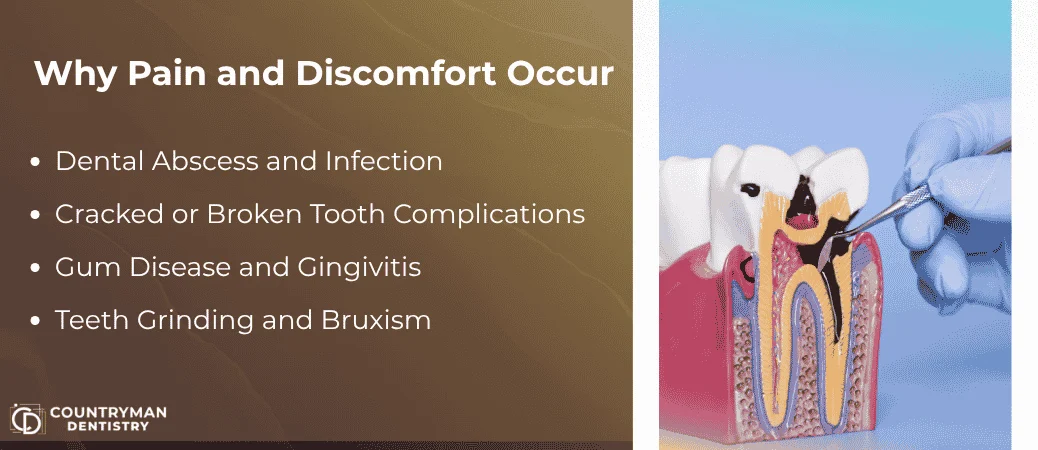
Dental Abscess and Infection
A dental abscess is a pocket of pus that forms when bacteria infect the root of your tooth or the space between your teeth and gums. This infection causes intense, throbbing pain that gets worse at night.
When you have an abscess, you might notice swelling in your face or gums. You could also experience a bad taste in your mouth or develop a fever. The pain typically doesn’t go away on its own and often gets worse over time.
Bacteria from an abscess can enter your bloodstream and travel to other parts of your body. This makes abscesses a serious medical emergency.
You need to see a dentist right away if you suspect you have one, even if it means going to an emergency room first for antibiotics.
Cracked or Broken Tooth Complications
A cracked tooth might seem minor, but it can cause serious pain at night. When you lie down, increased blood flow to your head puts pressure on the damaged area. Even small cracks can expose the sensitive nerve inside your tooth.
You might have cracked your tooth by biting down on something hard, grinding your teeth, or experiencing trauma to your mouth.
The crack allows hot and cold foods to reach the nerve, which explains why you experience sharp pain when eating or drinking.
A cracked or broken tooth can lead to infection if left untreated. Bacteria can enter through the crack and reach the tooth’s pulp. This turns a simple crack into a more serious problem requiring emergency care.
Gum Disease and Gingivitis
Gum disease starts as gingivitis, which causes your gums to become red, swollen, and prone to bleeding. Poor oral hygiene allows plaque to build up along your gum line, leading to inflammation that worsens at night.
As gum disease progresses, it can cause gum recession and expose the sensitive roots of your teeth. This leads to increased tooth sensitivity and pain when you’re trying to sleep.
You might notice your gums pulling away from your teeth or developing small pockets.
Inflammation of the gums can worsen during sleep, making the pain more noticeable. Untreated gum disease destroys the bone and tissue supporting your teeth, potentially leading to tooth loss.
Teeth Grinding and Bruxism
Bruxism means you clench or grind your teeth, often without realizing it. Many people grind their teeth at night due to stress or anxiety. This puts enormous pressure on your teeth and jaw.
When you grind your teeth regularly, you wear down the enamel and can develop cracks in your teeth. This creates sensitive teeth that hurt more at night. You might also experience jaw pain or headaches when you wake up.
Teeth grinding behaviors can damage the joint where your jaw meets your skull. This leads to chronic pain and discomfort that affects your ability to sleep.
A dentist can fit you with a night guard to protect your teeth from further damage.
Start your virtual consultation in Plano, Texas for severe tooth pain and emergency dental concerns
What to Do Before Seeing the Dentist
Taking the right steps at home can reduce pain and prevent complications while you wait for your dental appointment.
Proper care of injuries like knocked-out teeth or lost fillings can make a significant difference in treatment outcomes.
Managing Pain and Swelling at Home
Over-the-counter pain relievers can help you manage discomfort until you receive professional care. Ibuprofen works well for dental pain because it reduces inflammation in addition to blocking pain signals.
You can take 400-600mg every 6-8 hours with food.
If you can’t take ibuprofen, acetaminophen is another option. Some people find that alternating these medications every few hours provides better relief than using just one.
A cold compress applied to your cheek can reduce swelling and numb the area. Hold it against the affected side for 15-20 minutes, then remove it for 15-20 minutes before reapplying. Never put ice directly on your skin or inside your mouth.
Home care tips:
- Rinse gently with warm salt water (1/2 teaspoon salt in 8 ounces of water)
- Sleep with your head elevated on extra pillows
- Avoid very hot, cold, or sugary foods and drinks
- Don’t apply aspirin directly to your gums, as this can burn tissue
Handling Tooth Injuries and Knocked-Out Teeth
A knocked-out tooth requires immediate action to save it. Pick up the tooth by the crown (the white part you see when you smile), never by the root. If it’s dirty, rinse it gently with milk or water for no more than 10 seconds.
Try to place the tooth back in its socket if possible. Gently push it into place and hold it there by biting down on clean gauze. If you can’t reinsert it, store it in a small container of milk or your saliva.
Time is critical with a dental emergency like this. You have the best chance of saving the tooth if you see a dentist within 30 minutes.
For a broken tooth, rinse your mouth with warm water and save any pieces you can find. Cover sharp edges with dental wax or sugar-free gum to protect your tongue and cheeks from cuts.
Protecting Exposed Teeth and Lost Fillings
A lost filling exposes the sensitive inner part of your tooth to bacteria and temperature changes. You can temporarily fill the space with dental cement from a pharmacy or sugar-free gum as a short-term solution.
Clean the area gently and avoid chewing on that side of your mouth. Don’t use regular gum with sugar, as this can cause more damage to the exposed tooth structure.
If you have a broken tooth with sharp edges, dental wax can create a barrier. Roll a small amount into a ball, warm it between your fingers, and press it over the rough area.
What to avoid:
- Hard, crunchy, or sticky foods
- Extremely hot or cold beverages
- Poking the area with your tongue or fingers
- Delaying your appointment, as temporary fixes won’t prevent infection or further damage
How Emergency Dentists Diagnose and Treat Nighttime Pain
Emergency dentists follow specific steps to identify the source of your pain and provide immediate relief.
They use diagnostic tools to pinpoint the problem and offer treatments that address both your discomfort and the underlying issue.
Assessment Procedures During Emergency Visits

When you arrive for emergency dental services, your dentist will start with a detailed examination of your mouth. They’ll ask about when the pain started, what makes it worse, and if you have any swelling or fever.
Your emergency dentist will gently tap on your teeth to check for sensitivity. This helps them identify which tooth is causing the problem. They’ll also look at your gums for signs of infection like redness or pus.
X-rays are usually taken during emergency visits. These images show what’s happening beneath your gum line. They reveal cavities, abscesses, bone loss, and other problems that aren’t visible during a regular exam.
The dentist will check your bite and jaw movement too. Sometimes pain that feels like it’s coming from a tooth is actually from your jaw joint or grinding habits.
Common Treatments for Dental Emergencies
The treatment you receive depends on what’s causing your dental pain. For severe infections, your dentist may need to drain an abscess by making a small opening in the gum. This releases the trapped pus and provides immediate pressure relief.
Root canal treatment is often performed during emergency visits when the nerve inside your tooth is infected or damaged. Your dentist removes the infected tissue, cleans the inside of the tooth, and seals it.
Many patients feel better right away after this procedure.
If you have a badly damaged tooth, your dentist might place a temporary white filling or crown. This protects the tooth until you can return for permanent treatment.
For knocked-out teeth, they’ll try to reinsert and stabilize the tooth if you brought it with you.
Your dentist will also prescribe medications. Antibiotics help fight bacterial infections, while stronger pain relievers manage discomfort until the underlying problem heals.
Preventing the Spread of Infection
Your emergency dentist takes specific steps to prevent infection from spreading to other parts of your body. Dental infections can move quickly from your tooth to your jaw, face, and even your bloodstream if left untreated.
Antibiotics are prescribed when there’s clear evidence of bacterial infection. Your dentist will choose the right type based on the bacteria commonly found in dental infections.
You must take the full course even if you feel better after a few days.
The dentist may rinse the infected area with antimicrobial solutions during treatment. This removes bacteria and dead tissue that could continue causing problems.
They’ll also provide instructions for keeping the area clean at home using salt water rinses.
In severe cases where infection has spread beyond the tooth, you might need additional monitoring. Your emergency dentist will schedule follow-up appointments to ensure the infection is clearing and healing properly.
Tips for Preventing Nighttime Dental Emergencies
Good oral hygiene habits and protective measures can stop most dental emergencies before they start.
Catching problems early through regular checkups and addressing issues like teeth grinding reduces your risk of painful nighttime complications.
Best Practices for Oral Hygiene
Brushing twice daily with fluoride toothpaste removes plaque that causes cavities and gum disease. You should brush for two minutes each time, making sure to reach all tooth surfaces and along the gum line.
Flossing once a day cleans between your teeth where your toothbrush can’t reach. This prevents gum disease and catches food particles that can cause infections or decay.
Many nighttime dental emergencies stem from untreated cavities or gum infections that could have been prevented.
Replace your toothbrush every three months or sooner if the bristles fray. Worn bristles don’t clean effectively and can miss the plaque that leads to problems.
Using an antibacterial mouthwash adds extra protection against bacteria that cause gum disease and tooth decay.
Avoid using your teeth as tools to open packages or crack nuts. These habits can chip or crack your teeth, creating sharp edges or exposing sensitive inner layers that cause pain at night.
Managing Sensitive Teeth and Teeth Grinding

Sensitive teeth often signal underlying dental issues that need attention. Use toothpaste designed for sensitivity, which blocks pain signals from reaching your tooth nerves.
If sensitivity persists beyond two weeks, contact your dentist to check for cavities, gum recession, or enamel wear.
Teeth grinding (bruxism) can crack teeth, wear down enamel, and cause severe jaw pain that wakes you up. Many people grind their teeth at night without realizing it.
Signs include waking with a sore jaw, headaches, or worn teeth your dentist spots during checkups.
A custom-fitted night guard protects your teeth from grinding damage. Your dentist creates these guards to fit your mouth perfectly, making them more comfortable and effective than store-bought options.
Wearing one prevents the tooth damage that leads to emergency visits.
Stress often triggers bruxism, so managing stress through exercise, meditation, or therapy can reduce grinding. Avoiding caffeine and alcohol before bed also helps.
Routine Dental Checkups and Early Detection
Regular dental visits catch small problems before they become emergencies. Your dentist can spot hairline cracks, failing fillings, or early gum disease during routine exams.
Fixing these issues early prevents painful infections or broken teeth later.
Schedule cleanings and checkups every six months. Professional cleanings remove hardened plaque (tartar) that you can’t brush away at home. This prevents gum disease, which can lead to painful abscesses and tooth loss.
Dental X-rays reveal problems hidden beneath your gums or between teeth. These images show decay, infections, or bone loss before you feel any pain.
Treating these issues early is less expensive and less painful than waiting for a dental emergency.
If you have ongoing dental work like crowns or fillings, monitor them for changes. A loose crown or cracked filling can expose your tooth to bacteria, causing infections that flare up at night.
Report any concerns to your dentist right away rather than waiting for your next scheduled visit.
Frequently Asked Questions
Tooth pain at night brings up many urgent questions about whether you need immediate help and where to go.
Knowing the warning signs and your options can help you make quick decisions when you’re dealing with severe dental pain after hours.
How can I tell if my tooth pain at night is a true dental emergency?
Your tooth pain becomes a dental emergency when you have severe symptoms that won’t respond to normal care. Persistent tooth, gum, and jaw pain should trigger a call to a dentist as soon as possible.
Watch for these warning signs that mean you need immediate help. Severe pain that doesn’t get better with over-the-counter medicine requires urgent care.
Swelling in your face, jaw, or neck shows a spreading infection that can become dangerous.
Uncontrolled bleeding from your tooth or gums needs emergency attention. If you have a high fever along with tooth pain, this signals a serious infection.
A knocked-out tooth or severely cracked tooth also counts as an emergency.
You should also seek immediate care if you have trouble breathing or swallowing. These symptoms can mean the infection is spreading to other parts of your body.
What should I do right away if I have severe tooth pain in the middle of the night?
Call your dentist’s office first, even at night. Most dental offices have an emergency number or voicemail that can tell you where to get help.
Take over-the-counter pain medicine like ibuprofen or acetaminophen following the package directions. Rinse your mouth with warm salt water to help reduce swelling and clean the area.
Apply a cold compress to the outside of your cheek for 15 minutes at a time. This can help reduce pain and swelling. Avoid putting aspirin directly on your gums because it can burn the tissue.
If you don’t have a regular dentist, look up emergency dental services in your area. Many cities have dentists who provide after-hours emergency care.
When should I go to the emergency room instead of waiting for an emergency dentist?
Go to the emergency room if you have facial swelling that affects your breathing or swallowing. These symptoms can indicate a life-threatening infection spreading from your tooth.
Sudden neck or lower jaw pain can signal an emergency and warrants a call to 911, especially if you have heart problems. This type of pain can be a sign of a heart attack rather than just a dental issue.
You should also go to the ER if you have uncontrolled bleeding that won’t stop after applying pressure. High fever with severe tooth pain and facial swelling means the infection might be spreading through your bloodstream.
Keep in mind that emergency rooms have limits on dental care. ER doctors can prescribe antibiotics for infections and provide pain medication, but they typically can’t do dental work like tooth extractions or root canals.
What can the ER do for excruciating tooth pain, especially if I’m pregnant?
The emergency room can help manage your pain and infection, but they won’t fix the actual tooth problem. Doctors can prescribe antibiotics if you have a dental infection and give you stronger pain medication.
If you’re pregnant, ER doctors can choose medications that are safe for you and your baby. They can also check to make sure the infection isn’t spreading or causing other health problems.
The ER staff will address any life-threatening complications from your dental issue. However, you’ll still need to see a dentist to get the tooth treated properly.
After the ER visit, you need to follow up with a dentist as soon as possible. The pain relief and antibiotics from the ER are temporary solutions that buy you time to get proper dental care.
Is it possible to get a 24-hour emergency tooth extraction, and how do I find one fast?
Yes, some dentists offer 24-hour emergency services including extractions. Search online for “24-hour emergency dentist” or “emergency dental services” plus your city name.
Call your regular dentist’s emergency line first. They might have after-hours appointments or can refer you to an emergency dental clinic they work with.
Dental schools sometimes have emergency clinics that operate outside normal business hours. Hospital dental departments may also provide emergency extractions, especially in larger cities.
You can also call your local hospital and ask if they have a dental department or can recommend an emergency dentist. Some urgent care centers have connections with emergency dentists who can see you quickly.
What can I do if I have a dental emergency at night or on the weekend and I don’t have money?
Many emergency dentists offer payment plans that let you get treatment now and pay over time. Call and ask about their payment options before you assume you can’t afford care.
Dental schools provide lower-cost emergency care because dental students do the work under supervision. The treatment takes longer, but it costs much less than private practice care.
Community health centers often have dental clinics with sliding-scale fees based on your income. Some provide emergency dental services on nights and weekends.
Local health departments can sometimes help you find free or low-cost emergency dental care in your area. Charitable organizations and dental societies also maintain lists of dentists who provide reduced-cost emergency services.
If you absolutely can’t find affordable dental care, go to the emergency room for severe pain or infection. They must treat you regardless of your ability to pay, and you can work out payment arrangements later.