You brush twice a day, floss regularly, and maybe even use whitening toothpaste, but those yellow or brown spots on your teeth just won’t go away.
Many people find that over-the-counter whitening strips and toothpastes work well for surface stains, but they hit a wall when dealing with deeper discoloration.
Professional teeth whitening uses stronger bleaching agents and advanced techniques that can penetrate below the enamel to remove stubborn tooth stains that store-bought products simply can’t reach.
The difference comes down to the strength of the whitening formula and how it’s applied.
While OTC products contain low concentrations of hydrogen peroxide that only work on surface-level stains, professional treatments offered by dentists use higher concentrations combined with custom-fitted trays or laser technology.
This means your dentist can tackle the tough stains caused by medications, aging, or years of coffee drinking that leave you frustrated with at-home options.
If you’ve been wondering whether professional whitening is worth the investment for your specific stain issues, understanding what makes these treatments more effective will help you make the right choice.
From intrinsic stains that form inside the tooth to stubborn discoloration that resists traditional methods, professional options offer solutions that can finally give you the whiter smile you’ve been working toward.
Key Takeaways
- Professional teeth whitening uses stronger bleaching concentrations than OTC products to remove deep stains below the enamel surface
- Dentists can customize treatments to target stubborn intrinsic stains caused by medication, aging, or excessive fluoride that over-the-counter products cannot remove
- Professional whitening delivers longer-lasting results and includes expert guidance on maintaining your brighter smile while minimizing sensitivity
Discover professional teeth whitening for deep stains and achieve a noticeably brighter smile today
Understanding Tooth Stains and Why OTC Products Struggle
Not all tooth stains form the same way, and the type of discoloration you have determines whether store-bought whitening products will actually work for you.
The chemical strength in over-the-counter options simply can’t penetrate deeper layers where stubborn stains hide.
Types of Stains: Extrinsic vs. Intrinsic
Extrinsic stains sit on the outer surface of your enamel. These surface stains come from daily contact with stain-causing foods and drinks like coffee, tea, red wine, and berries.
You can often reduce these with regular brushing and flossing.
Intrinsic stains form inside your tooth’s structure, affecting the dentin layer beneath your enamel.
These deeper stains develop from trauma, certain medications, excessive fluoride exposure during childhood (fluorosis), or aging.
Your enamel naturally thins over time, making the yellowish dentin more visible.
OTC whitening strips and toothpaste mainly target extrinsic stains. They contain low concentrations of peroxide that only work on the tooth’s outer layer.
When you have intrinsic stains or severe tooth discoloration, these products won’t give you the results you want.
Common Causes: Foods, Drinks, and Habits
Your daily habits create most tooth stains over time. Dark beverages like coffee, tea, and cola contain pigments that stick to your enamel. Red wine and dark sodas are particularly problematic.
Smoking or using tobacco products causes some of the most stubborn stains on teeth. The tar and nicotine create yellow or brown discoloration that goes beyond simple surface stains.
If you quit smoking, you’ll prevent future staining but existing damage often remains.
Certain foods contribute to tooth discoloration too:
- Berries (blueberries, blackberries)
- Tomato-based sauces
- Curry and turmeric
- Balsamic vinegar
- Soy sauce
Some medications like tetracycline antibiotics cause intrinsic stains when taken during tooth development. Enamel erosion from acidic foods and drinks also makes your teeth more prone to staining.
Limitations of Whitening Toothpaste and Strips
Whitening toothpaste contains mild abrasives and low levels of peroxide, usually around 3% to 10%. These products can remove some surface stains but won’t change your tooth’s actual color.
Over-the-counter whitening products work slowly and produce modest results at best.
Whitening strips suffer from similar problems. They don’t fit everyone’s teeth properly, which leads to uneven whitening. The gel might miss spots between your teeth or along your gum line.
Store-bought products also can’t address intrinsic stains effectively. Even activated charcoal toothpaste, despite marketing claims, only removes surface debris through abrasion.
It doesn’t actually whiten teeth and may damage your enamel with regular use.
Some people experience tooth sensitivity from using OTC products too frequently or incorrectly. Without professional guidance, you might apply them longer than recommended, causing discomfort.
The Role of Enamel and Dentin
Your enamel is the hard, white outer layer that protects your teeth. When healthy and thick, it gives your smile a bright appearance. The dentin underneath has a naturally yellow or grayish color.
As enamel thins from aging or enamel erosion, more of the darker dentin shows through. This creates tooth discoloration that no amount of surface whitening can fix.
An electric toothbrush with proper technique helps maintain enamel health but won’t reverse existing thinning.
Professional whitening systems can target deep or stubborn discoloration more effectively because they use stronger concentrations of whitening agents.
These treatments penetrate through the enamel to reach stained dentin, addressing both extrinsic and intrinsic stains that OTC products simply can’t handle.
Schedule professional teeth whitening for deep stains in Plano, Texas for powerful, lasting results
How Professional Whitening Outperforms OTC Solutions
Professional whitening treatments use higher concentrations of active ingredients, custom-fitted trays for even coverage, and dental supervision to deliver faster and longer-lasting results than over-the-counter whitening products.
High-Strength Whitening Agents: Hydrogen and Carbamide Peroxide
The biggest difference between professional teeth whitening and drugstore kits comes down to strength. Over-the-counter whitening products typically contain 3% to 10% hydrogen peroxide or carbamide peroxide.
Professional whitening treatments use much stronger formulas, with concentrations ranging from 15% to 40%.
These powerful whitening agents can break down deep, stubborn stains that weaker formulas can’t touch.
The higher concentration means the whitening gel penetrates deeper into your tooth enamel to tackle intrinsic stains from aging, medication, or trauma.
In-office whitening delivers dramatic results in just 60 to 90 minutes. OTC products require weeks of daily use to achieve even modest improvement.
The difference in whitening results becomes clear when you compare shade changes—professional treatments often lighten teeth by three to eight shades in one visit, while drugstore strips might only improve your smile by one to three shades.
Custom-Fitted Trays and Precise Application
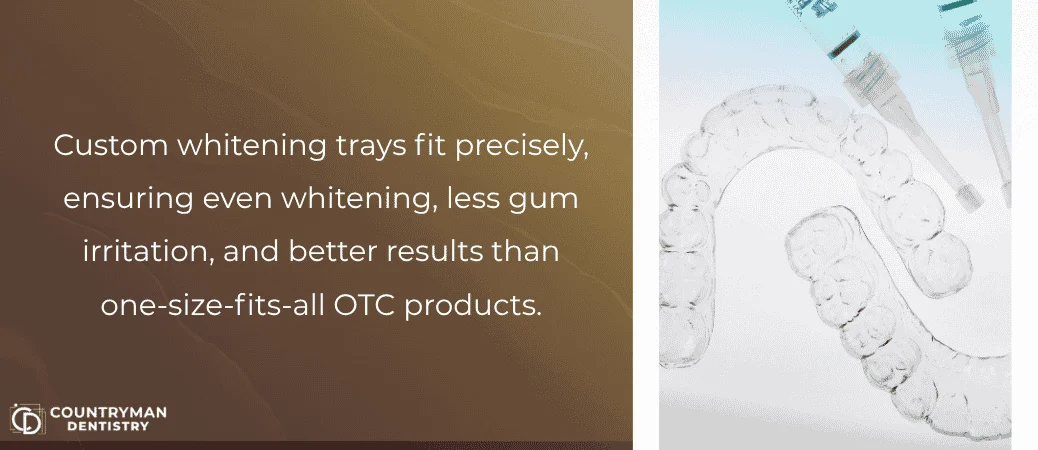
Your dentist creates custom-fitted trays from exact molds of your teeth. These trays hold the whitening gel precisely against every surface without gaps or leaks. The snug fit ensures even coverage across all your teeth.
One-size-fits-all trays from OTC whitening products rarely fit properly. They allow whitening gels to pool unevenly, leading to blotchy results and wasted product.
The gel can also leak onto your gums and cause irritation.
Custom whitening trays also work around dental restorations like crowns and veneers. Your dentist can adjust the treatment plan to avoid areas where whitening won’t be effective.
This level of precision simply isn’t possible with store-bought strips or trays that don’t account for your unique smile.
Supervised Care and Enhanced Safety
Professional whitening starts with a thorough dental exam before any treatment begins. Your dentist checks for cavities, cracks, gum disease, or exposed roots that could cause problems during whitening.
Applying bleaching agents to damaged teeth can cause severe sensitivity and pain. Without this screening step, you risk making existing dental problems worse.
During in-office whitening, your dentist also protects your gums with a clinical barrier before applying the gel.
This protection prevents chemical burns and soft tissue damage. OTC products offer little to no gum protection, leaving you vulnerable to irritation.
If you experience any discomfort during professional whitening treatment, your dentist can adjust the procedure immediately.
Long-Term Whitening Results
Professional whitening results typically last one to three years with proper care. The stronger formulas penetrate deeper into your enamel, creating changes that resist fading.
Many patients maintain their bright smiles with occasional touch-ups using their custom trays.
OTC whitening results fade much faster, usually within three to six months. The lower concentration doesn’t create lasting changes to your tooth structure.
You’ll need to keep buying new products repeatedly to maintain even modest improvements.
Your dentist can also recommend professional take-home systems like Opalescence that bridge the gap between in-office treatments and drugstore options.
These systems use your custom trays with professional-strength gel you apply at home over two to four weeks.
Start your virtual consultation for professional teeth whitening in Plano, Texas from home
Advanced Dental Techniques for Treating Stubborn and Intrinsic Stains
Professional treatments use stronger whitening agents and longer exposure times to break down deep stains that store-bought products cannot reach.
Dentists combine multiple approaches, from laser-activated sessions to custom-fitted trays, to tackle different types of stubborn discoloration.
In-Office Whitening and Laser Treatments
Your dentist can apply high-concentration whitening gel directly to your teeth in a controlled clinical setting.
These professional whitening sessions use gels with 25-40% hydrogen peroxide, which is much stronger than the 10% you’ll find in store products.
Laser whitening treatments activate the gel to speed up the chemical reaction that breaks down stain molecules. The laser also helps the whitening agents penetrate deeper into your tooth structure.
However, high-intensity lasers can temporarily dehydrate your teeth, making them look whiter for a short time before the color returns.
That’s why many dentists now combine in-office sessions with take-home treatments for lasting results on intrinsic staining.
Professional Home Whitening Kits
Custom take-home trays fit your teeth precisely and hold whitening gel against every surface without gaps.
Your dentist creates these trays from molds of your mouth, ensuring the gel stays in contact with stained areas for 6-8 hours overnight.
These home whitening kits use professional-strength gel that continues working while you sleep.
The custom-fitted trays prevent saliva from washing away the whitening agents, which gives the oxygen time to reach deep into the dentin layer.
You’ll wear the trays nightly for 2-4 weeks depending on how severe your stains are.
This slow, steady approach works better for stubborn teeth stains than quick treatments because it allows continuous oxygenation to break down chromophores permanently.
Tackling Deep Stains: Age, Fluorosis, and Medication
Tetracycline antibiotics taken during childhood create gray or brown bands on teeth that require specialized treatment.
Professional approaches for antibiotic stains combine in-office preparation to increase tooth permeability with extended wear of custom trays at home.
Excessive fluoride exposure causes white or brown mottling called fluorosis. These stains respond to extended bleaching protocols but may need microabrasion to remove surface defects first.
Age-related yellowing happens when dentin darkens over time and enamel becomes thinner.
Deep bleaching methods can lighten these stains by several shades, though results vary based on how long the discoloration has been present.
Alternatives for Severe Intrinsic Staining
Some genetic conditions like dentinogenesis imperfecta and amelogenesis imperfecta cause structural tooth defects that whitening gel cannot fix.
These teeth may have abnormal enamel or dentin that doesn’t respond to any whitening agents.
Porcelain veneers cover the front surface of your teeth with thin shells that match your desired shade. Dental crowns can restore severely stained teeth when whitening treatments fail to produce acceptable results.
Internal bleaching treats dead teeth that have darkened from trauma or nerve damage. Your dentist places whitening agents inside the tooth chamber to lighten it from within, though this approach only works on non-vital teeth.
Side Effects and Safety: Minimizing Sensitivity and Gum Irritation
Professional teeth whitening is generally safe, but tooth sensitivity and gum irritation are the most common side effects you might experience.
Understanding how to prevent and manage these reactions helps you achieve a brighter smile comfortably.
Addressing Tooth Sensitivity
Tooth sensitivity happens when bleaching agents penetrate your enamel and temporarily irritate the nerve inside your tooth.
Professional whitening does not permanently damage tooth enamel, but it causes temporary dehydration that naturally reverses through saliva.
The sensitivity typically fades within a few days after treatment. You can reduce discomfort by using toothpaste containing potassium nitrate, which blocks pain signals from your tooth’s nerve to your brain.
Fluoride toothpaste also helps strengthen your enamel and reduce sensitivity after whitening. Your dentist may apply fluoride gel immediately after your whitening session to protect your teeth.
If you have naturally sensitive teeth, low-irritant products or professional treatments that protect both enamel and nerves work better for your situation.
Preventing Gum and Soft Tissue Issues
Gum irritation occurs when whitening gel contacts your gums during treatment. Professional treatments use barriers like rubber dams or protective gel to shield your gums from the bleaching agent.
Immediate and long-term steps can help if you experience gum burns or irritation. Rinsing with cool water and applying aloe vera gel soothes inflamed tissue right away.
Custom-fitted trays from your dentist fit precisely around your teeth, which prevents gel from spilling onto your gums. This makes professional options safer than generic strips or trays that don’t fit your mouth properly.
The mild irritation you might feel usually disappears within 24 to 48 hours.
Choosing Safe Whitening Methods
Custom-fitted trays and in-office treatments are the safest and most effective ways to whiten teeth. Professional treatments use controlled concentrations of hydrogen peroxide or carbamide peroxide under dental supervision.
Over-the-counter products like whitening toothpaste work mainly on surface stains and pose less risk of sensitivity.
However, overusing teeth whitening products can harm your smile and potentially lead to enamel erosion if you apply them too frequently.
Your dentist can assess your oral health before whitening and recommend the right concentration for your needs. They’ll also check for cavities or gum disease that should be treated before you begin whitening.
Professional monitoring ensures you get results without compromising your dental health.
Maintaining a Brighter Smile After Professional Whitening
Getting the best teeth whitening treatment is just the first step. Your daily habits and care routine will determine how long your bright smile lasts and how well you can prevent new stains from forming.
Daily Oral Hygiene and Good Habits
Brushing and flossing are your main defenses against new stains. You should brush your teeth at least twice a day with a soft-bristled toothbrush and fluoride toothpaste.
Wait about 30 minutes after eating before you brush, especially if you’ve had acidic foods or drinks.
Flossing once daily removes plaque and food particles between your teeth where stains can hide. These areas are often missed during brushing alone.
Some people find success with oil pulling using coconut oil for 10-15 minutes before brushing. This traditional practice may help remove surface stains and bacteria.
Use a whitening toothpaste once or twice a week to help maintain your results. Don’t use it every day because it can be abrasive.
Rinse your mouth with water after consuming stain-causing foods or drinks to wash away pigments before they settle.
Dietary Tips to Prevent New Stains
Stain-causing foods and beverages are your whitened teeth’s biggest enemies. Coffee, tea, red wine, and dark sodas contain pigments that can quickly dull your smile.
You don’t have to give up everything you love. Use a straw when drinking iced coffee or tea to minimize contact with your front teeth. Rinse with water immediately after consuming dark-colored items.
Foods and drinks to limit:
- Coffee and black tea
- Red wine and dark liquors
- Berries and tomato sauce
- Soy sauce and balsamic vinegar
- Dark sodas and sports drinks
Teeth-friendly alternatives:
- White wine instead of red
- Green or white tea instead of black
- Light-colored fruits like apples and pears
Eating crunchy vegetables like celery and carrots can actually help remove surface stains naturally. They act like a gentle scrub for your teeth while you chew.
Regular Dental Cleanings and Check-Ups

Professional dental cleanings every six months are essential for keeping your smile bright. Your dental hygienist can remove stains from teeth that regular brushing can’t reach.
These cleanings remove plaque and tartar buildup that can make teeth look dull.
During your check-ups, your dentist can spot early signs of new staining and recommend solutions. Regular dental cleanings also keep your gums healthy, which frames your white teeth and enhances your overall smile.
Ask your dental hygienist about touch-up treatments during your visits. They can assess whether you need a booster session to maintain your desired shade.
Long-Term Maintenance Strategies
Most professional whitening results last 1-3 years with proper care. Touch-up treatments every 6-12 months can extend your results significantly.
Your dentist may provide you with custom trays and professional-grade gel for at-home maintenance.
Keep a consistent oral hygiene routine to protect your investment. Take photos of your smile right after whitening so you can track any color changes over time.
If you smoke or use tobacco products, quitting is the single most important thing you can do. Tobacco causes rapid re-staining that no amount of brushing can prevent.
Consider scheduling your touch-ups before important events like weddings or job interviews.
This gives you control over maintaining the exact shade you want. Store any at-home whitening products in a cool, dark place to preserve their effectiveness.
Frequently Asked Questions
Over-the-counter whitening products work on surface stains, but deeper discoloration often needs stronger treatments that only dentists can provide.
Professional whitening can brighten teeth by up to 8 shades in a single visit and offers safer options for people with sensitive teeth.
Why do some tooth stains stay even after using whitening strips or toothpaste?
Whitening strips and toothpaste only address surface-level stains on your tooth enamel. Deep stains that have settled into the inner layers of your teeth need stronger bleaching agents to break them down.
Over-the-counter products contain lower concentrations of whitening ingredients compared to professional treatments.
This means they can’t penetrate deep enough to remove stubborn discoloration from years of coffee, tea, or tobacco use.
Some types of stains, like those caused by certain medications or trauma to the tooth, are intrinsic stains that sit within the tooth structure. These stubborn stains won’t budge with regular whitening toothpaste or strips.
How can a dentist remove deep stains that have built up over many years?
Dentists use concentrated bleaching agents like hydrogen peroxide or carbamide peroxide that are much stronger than store-bought options.
These professional whitening treatments break down stains at a deeper level within your tooth structure.
Your dentist may apply a protective barrier to your gums before treatment. This allows them to use higher strength whitening solutions safely on your teeth.
For extremely deep stains, your dentist might recommend multiple sessions or combine whitening with other cosmetic treatments.
Professional dental cleanings before whitening also help remove surface buildup so the bleaching agents work better.
What types of stains respond best to professional whitening treatments?
Yellow and brown stains from food, drinks, and smoking respond best to professional whitening. These extrinsic stains sit on the outer enamel layer and break down easily with strong bleaching agents.
Age-related yellowing also responds well because it affects the enamel surface. Coffee, tea, red wine, and dark sodas create the kind of staining that professional treatments can effectively remove.
Gray stains from certain medications or tooth trauma are harder to treat. Some intrinsic discoloration may need additional cosmetic procedures like veneers if whitening alone doesn’t work.
How quickly can professional whitening show results compared to at-home products?
Professional treatments can improve your tooth color by up to 8 shades in just one visit. You’ll typically see dramatic results within an hour at your dentist’s office.
At-home whitening kits usually require daily use for several weeks to show noticeable changes. Even then, the results are often less dramatic than what you’d get from a professional treatment.
The concentrated bleaching products used in professional settings work much faster than over-the-counter options. This means you spend less time whitening and more time enjoying your brighter smile.
Is professional teeth whitening safe for sensitive teeth and gums?
Your dentist can adjust the strength and application method based on your sensitivity level. They use protective barriers on your gums and may apply desensitizing treatments before or after whitening.
Professional whitening is more effective for people with sensitivity because dentists monitor the process closely. If you experience discomfort, they can modify the treatment immediately.
At-home products can actually cause more sensitivity issues because you don’t have professional guidance. Your dentist can recommend special toothpaste or fluoride treatments to manage sensitivity during and after whitening.
What should I do to keep my teeth white after a professional whitening treatment?
Avoid dark-colored foods and drinks like coffee, tea, red wine, and berries for at least 48 hours after treatment. Your teeth are more porous right after whitening and absorb stains more easily during this time.
Brush twice daily with whitening toothpaste and floss regularly to prevent new stains from forming. Regular dental cleanings every six months help maintain your results by removing surface buildup.
Consider using a straw when drinking dark beverages to minimize contact with your front teeth. Your dentist may also provide custom touch-up trays you can use at home to maintain your bright smile between professional treatments.