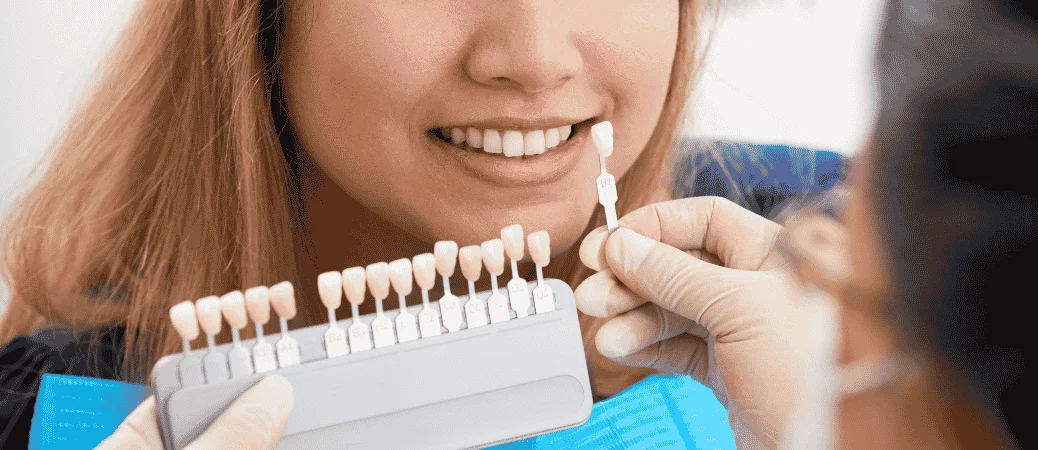
Your smile matters, and even small flaws like chips, gaps, or discoloration can affect how you feel about it.
Dental bonding offers a quick and affordable fix for minor issues, while veneers provide a longer-lasting and more complete transformation.
Both cosmetic dental treatments can improve your appearance, but they work differently and fit different needs and budgets.
Choosing between these two options depends on what you want to fix, how much you want to spend, and how long you want the results to last.
A cosmetic dentist can help you decide which treatment makes the most sense for your goals. Understanding the main differences will help you have a better conversation with your dentist about which option is right for your smile.
This guide breaks down everything you need to know about both cosmetic dentistry procedures. You’ll learn about how each treatment works, what problems they solve best, and what to expect during and after your visit.
Key Takeaways
- Bonding works best for small chips and gaps while veneers handle bigger cosmetic concerns and last longer
- Bonding typically costs less and takes one visit, but veneers are more durable and stain-resistant
- Your choice depends on your budget, timeline, and how much improvement you want for your smile
Explore a veneers vs dental bonding comparison to find the right smile solution for your goals
Table of Content
- Understanding Dental Bonding and Veneers
- Comparing Benefits and Limitations of Each Option
- Who Is Each Treatment Best For?
- Procedure Timeline, Recovery, and Cost Differences
- Caring for Your New Smile
- Frequently Asked Questions
Understanding Dental Bonding and Veneers
Both dental bonding and veneers can fix small problems with your teeth, but they use different materials and methods.
Bonding applies a tooth-colored resin directly to your tooth, while veneers are thin shells that cover the front of your teeth.
What Is Dental Bonding?
Dental bonding uses a composite resin material that matches your tooth color. Your dentist applies this soft, putty-like resin directly to your tooth’s surface.
The process is simple. First, your dentist roughens your tooth slightly and applies a conditioning liquid. Then they carefully shape the tooth-colored resin on your tooth to fix chips, cracks, or gaps.
A special UV light hardens the resin and bonds it to your tooth. After the material sets, your dentist polishes it to match your other teeth.
The whole process usually takes 30 to 60 minutes per tooth and you can complete it in just one visit.
How Do Veneers Work?
Veneers are thin shells that your dentist permanently attaches to the front of your teeth. Most dental veneers are made from porcelain, though some use composite resin.
Getting porcelain veneers takes multiple visits. Your dentist removes a small layer of enamel from your tooth to make room for the veneer. They take impressions of your teeth and send them to a lab that creates custom veneers.
You’ll wear temporary veneers while the lab makes your permanent ones. This usually takes one to four weeks. At your final appointment, your dentist bonds the veneers to your teeth with a strong adhesive.
The Materials: Composite Resin vs. Porcelain
The main difference between these treatments is the material used. Composite resin in bonding is a more affordable option but doesn’t last as long as porcelain.
Composite Resin Benefits:
- Applied in one visit
- Costs less than porcelain
- Easy to repair if damaged
- Removes little to no enamel
Porcelain Benefits:
- Resists stains better
- Looks more natural
- Lasts 10-15 years or longer
- Mimics tooth translucency
Porcelain veneers resist staining more than composite resin and natural tooth enamel. However, composite resin can be replaced or repaired more easily if it chips or becomes discolored over time.
Schedule your cosmetic dentistry consultation in Plano, Texas for veneers or dental bonding

Comparing Benefits and Limitations of Each Option
Veneers and bonding differ significantly in how they look over time, how well they resist stains, and how much tooth structure needs to be altered.
These factors play a major role in determining which option works best for your smile makeover.
Aesthetic Results and Longevity
Porcelain veneers deliver more natural-looking results because the custom-made shells mimic your tooth’s texture and translucency. They typically last 10 to 15 years with proper care.
The porcelain material reflects light like natural enamel, creating a seamless smile transformation.
Dental bonding offers good aesthetic results for minor imperfections but has a shorter lifespan. The composite resin usually lasts 3 to 7 years before needing replacement or touch-ups.
While bonding can improve your smile design, it doesn’t match the translucent quality of porcelain.
Longevity comparison:
- Veneers: 10-15 years
- Bonding: 3-7 years
Durability and Stain Resistance
Veneers provide superior stain resistance compared to bonding since porcelain doesn’t absorb pigments as easily as composite resin. Your veneers will maintain their brightness longer, even with regular coffee or tea consumption.
Dental bonding can turn yellow over time for the same reasons natural teeth stain. The composite resin material is more porous than porcelain, making it susceptible to discoloration from foods, drinks, and tobacco.
You also can’t whiten bonded teeth like natural teeth since the bonding material doesn’t react to whitening agents.
Enamel Removal and Tooth Preparation
When comparing dental bonding vs veneers, enamel removal is a key difference. Bonding requires almost no enamel removal.
Your dentist simply roughens the tooth surface before applying the resin, making it the most conservative option.
Veneers require your dentist to remove a thin layer of enamel to create space for the porcelain shell. While this is less invasive than crowns, the process is permanent.
Once you get veneers, you’ll need to maintain them or replace them throughout your life since the enamel removal cannot be reversed.
Start your virtual consultation in Plano, Texas to compare veneers and dental bonding options
Who Is Each Treatment Best For?
The right choice between bonding and veneers depends on your specific dental needs, budget, and how long you want results to last.
Bonding works well for quick fixes and minor issues, while veneers suit people seeking more dramatic changes.
Ideal Cases for Dental Bonding
Dental bonding is best for minor imperfections that don’t need extensive correction. If you have a small chip from biting something hard or a minor crack that affects your smile, bonding can fix it quickly.
You might be a good candidate for bonding if you need to close small gaps between your teeth. The procedure also works well for hiding minor discoloration that doesn’t respond to whitening treatments.
Bonding is ideal if you’re on a tight budget or don’t have dental insurance for cosmetic dental treatment.
The procedure takes just one visit and doesn’t require you to wear temporary veneers while waiting for a lab to create permanent ones.
This option suits you if you want to slightly reshape a tooth or make it look longer. It’s also perfect when you need a quick cosmetic fix before an important event like a wedding or job interview.
Situations Suited for Veneers
Veneers work better when you have more noticeable smile issues that bonding can’t fully address. If your teeth have moderate to severe discoloration that won’t improve with teeth whitening procedure, custom veneers can cover the stains completely.
You should consider veneers if you have worn-down enamel from grinding your teeth or aging. They’re also good for covering multiple teeth with various imperfections at once.
Veneers suit you if you want results that last many years with proper care. The porcelain material resists stains better than bonding resin, which means your smile stays brighter longer.
This option makes sense when you have larger gaps between teeth or more significant chips and cracks.
Veneers can also help if you have misshapen teeth that need reshaping or if you want to create a more symmetrical appearance across your smile.
Smile Makeovers and Transformation Goals
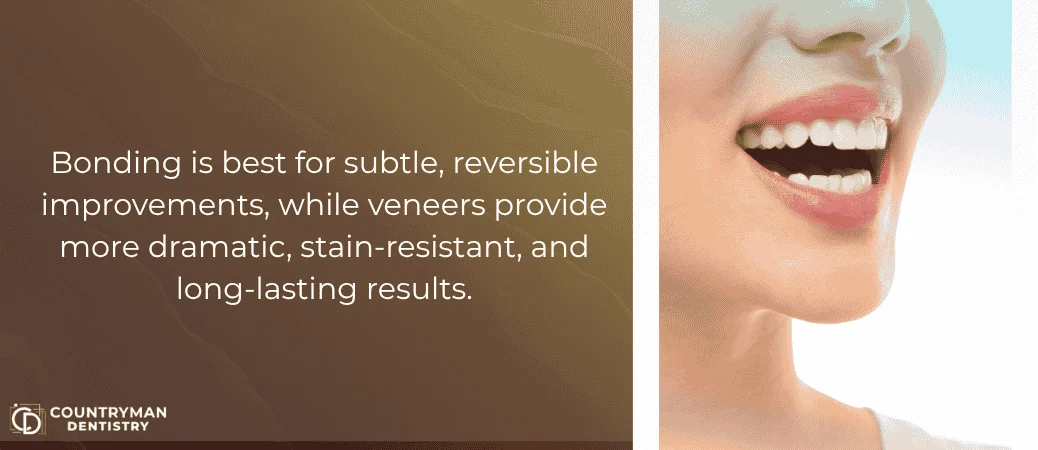
Choose bonding when you want subtle improvements without removing much tooth enamel. This less invasive approach lets you make changes while keeping most of your natural tooth structure intact.
Veneers deliver the dramatic transformations you might see in before-and-after photos. They give you that polished, camera-ready look that many people associate with celebrity smiles.
Your long-term goals matter too. If you’re looking for a temporary solution or aren’t sure you want permanent changes, bonding gives you more flexibility.
Veneers require removing enamel, which means you’ll always need some type of covering on those teeth.
Consider your lifestyle and habits. If you drink coffee, tea, or red wine regularly, veneers resist staining better than bonding material.
But if you play contact sports or grind your teeth, you’ll need to protect either treatment with a mouthguard.
Procedure Timeline, Recovery, and Cost Differences
Bonding takes just one visit while veneers need multiple appointments over several weeks. The cost difference between dental bonding and veneers is significant, with bonding being much more affordable.
Appointment Process and Duration
Dental bonding requires only one visit to your dentist. Your dentist will select a resin color that matches your teeth, roughen the tooth surface, and apply the composite material. The entire process usually takes 30 to 60 minutes per tooth.
Veneers need two to three separate visits. During your first appointment, your dentist removes a thin layer of enamel and takes impressions of your teeth.
You’ll wear temporary veneers while the permanent ones are made in a lab.
This waiting period typically lasts one to four weeks. At your final visit, the dentist bonds the custom porcelain veneers to your teeth with special adhesive.
Expected Costs and Investment
Dental bonding typically costs between $300 and $600 per tooth. This makes it the more budget-friendly option for fixing minor problems.
Porcelain veneers cost between $925 and $2,500 per tooth. The higher price reflects the custom fabrication process and quality of materials used. Keep in mind that cosmetic procedures usually aren’t covered by dental insurance.
Bonding may need replacement every 3 to 10 years depending on your care habits. Veneers can last 10 to 15 years or longer with proper maintenance, which may justify the higher upfront cost for some patients.
Reversibility and Permanence
Bonding is mostly reversible since it removes almost no tooth enamel. Your dentist can remove the composite resin without causing permanent changes to your natural teeth.
Veneers are permanent because your dentist must remove enamel to make room for them.
Once you get veneers, you’ll always need some type of covering on those teeth. This is an important factor to consider before moving forward with treatment.
Caring for Your New Smile
Whether you chose bonding or veneers, proper care keeps your teeth looking great and helps your investment last. Good daily habits and regular dental visits protect your results and prevent damage.
Oral Hygiene Tips
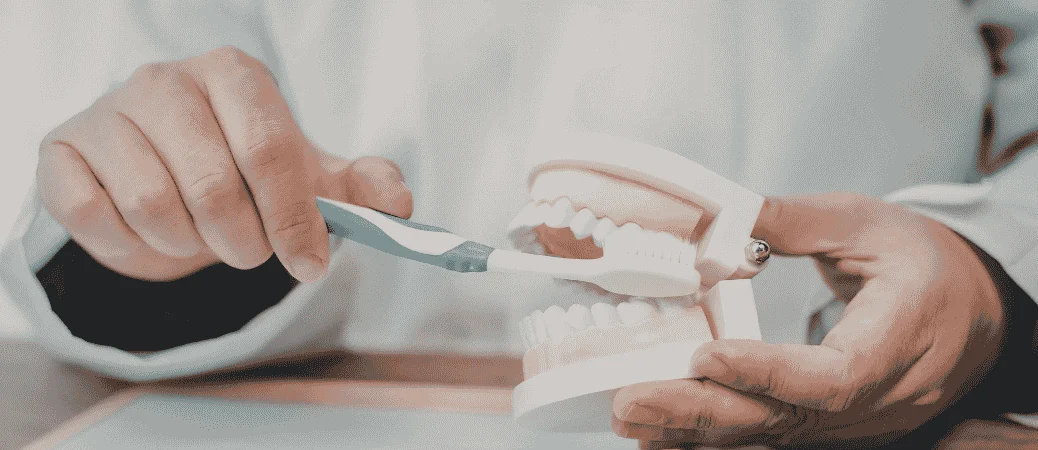
Brush your teeth twice daily with fluoride toothpaste to keep both bonding and veneers clean. Use a soft-bristled toothbrush to avoid scratching the surface of your cosmetic work.
Floss at least once per day to remove food and plaque between your teeth. This prevents staining and decay around the edges of your bonding or veneers.
Foods and drinks to limit:
- Coffee and red wine (can stain bonding)
- Hard candies and ice (can chip bonding material)
- Very sticky foods (can pull at edges)
Avoid using your teeth as tools to open packages or bite your nails. Both bonding and veneers can crack or chip under too much pressure, just like natural teeth.
Maintaining Results Over Time
Bonding typically lasts 3 to 7 years before needing touch-ups or replacement. Veneers usually last 10 to 15 years or longer with proper care.
Watch for changes in color, especially with bonding, which can stain more easily than veneers. You might notice gradual yellowing if you drink coffee or tea regularly.
If you grind your teeth at night, ask your dentist about a night guard. This protects your bonding or veneers from excessive wear and cracking.
Bonding preserves your natural tooth structure, which makes it easier to upgrade to veneers later if you want a more permanent solution.
Professional Checkups and When to Seek Help
Schedule dental checkups every six months so your dentist can examine your bonding or veneers. Your cosmetic dentist will check for chips, cracks, or signs of wear.
Contact your dentist right away if you notice:
- A chip or crack in the material
- Loose edges or lifting
- Pain or sensitivity around treated teeth
- Discoloration that won’t brush away
Professional cleanings remove buildup that regular brushing misses. Your hygienist knows how to clean around cosmetic work without damaging it.
Frequently Asked Questions
Both treatments work well for different cosmetic issues, with bonding being faster and cheaper while veneers last longer and handle bigger changes.
Cost differences can be significant, and each option has trade-offs in terms of appearance and durability.
What kinds of minor tooth imperfections can dental bonding fix compared to veneers?
Dental bonding works best for minor imperfections like small chips, slight discoloration, or minor gaps between your teeth. It offers a subtle improvement that can fix these issues in just one visit.
The bonding material is applied directly to your tooth and shaped to cover the problem area.
Veneers handle more extensive cosmetic concerns. They can fix significant discoloration, uneven teeth, or worn enamel that bonding might not fully address.
Choosing between bonding and veneers often depends on how much correction your smile needs, with minor issues responding well to bonding and bigger changes requiring veneers.
How long do bonding and veneers usually last, and which one tends to hold up better?
Dental bonding typically lasts between 3 to 10 years depending on how well you care for it. The composite resin material can chip or stain over time, especially if you bite hard foods or drink a lot of coffee or tea.
Porcelain veneers are much more durable and can last 10 to 15 years or even longer with proper care. The porcelain material resists staining better than bonding resin.
Veneers hold up better overall because they’re custom-made in a dental lab and bonded more permanently to your teeth.
How do the costs of dental bonding and veneers compare, and what factors affect the price?
Bonding is typically a more affordable option compared to veneers. Dental bonding usually costs between $300 to $600 per tooth. The lower price reflects the simpler procedure and materials used.
Veneers cost significantly more, ranging from $800 to $2,500 per tooth or higher. Factors that affect the price include the type of veneer material you choose, your dentist’s experience, and your location. Porcelain veneers cost more than composite veneers because they require lab work and multiple visits.
Do veneers look more natural than bonding, especially for matching color and shine?
Porcelain veneers typically look more natural because they mimic the light-reflecting properties of real tooth enamel. The material has a translucent quality that creates a realistic shine.
Your dentist can also customize the color to match your surrounding teeth perfectly.
Bonding can look natural too, but it doesn’t have the same depth and translucency as porcelain. The composite resin material may appear slightly more opaque.
Over time, bonding can also pick up stains from foods and drinks, which can make it stand out more against your natural teeth.
What are the biggest pros and cons of bonding versus porcelain veneers for small chips or gaps?
Bonding offers several advantages for small chips or gaps. It’s quick, often completed in one appointment, and costs less than veneers. Your dentist can fix the problem without removing much of your natural tooth structure.
The downsides of bonding include shorter lifespan and higher risk of staining. Porcelain veneers provide a more comprehensive makeover with better durability and stain resistance.
However, veneers require removing some tooth enamel, cost more, and need multiple dental visits to complete.
Why might a dentist recommend bonding instead of veneers for certain patients?
Your dentist might suggest bonding if you only need to fix a very small cosmetic issue. Bonding is a faster option that preserves more of your natural tooth structure since it requires minimal tooth preparation.
Bonding also makes sense if you’re on a tight budget or want to try out a cosmetic change before committing to something more permanent.
Younger patients who are still developing might benefit from bonding as a temporary solution until they’re ready for veneers. Your dentist will evaluate your specific needs and goals to recommend the best treatment.